Salted Caramel Thumbprint Cookies – Buttery, Chewy, and Perfectly Sweet-Salty
These cookies hit that sweet spot where buttery shortbread meets silky caramel and a pop of flaky sea salt. They’re the kind of treat you make once and then keep getting asked for again and again. The dough is simple, the filling is quick, and the results feel bakery-level without the fuss.
Whether you’re baking for a holiday tray, a potluck, or a cozy night in, these thumbprints deliver comfort and a little bit of wow. They also store well, so you can make them ahead and still get that fresh, soft bite when it’s time to serve.
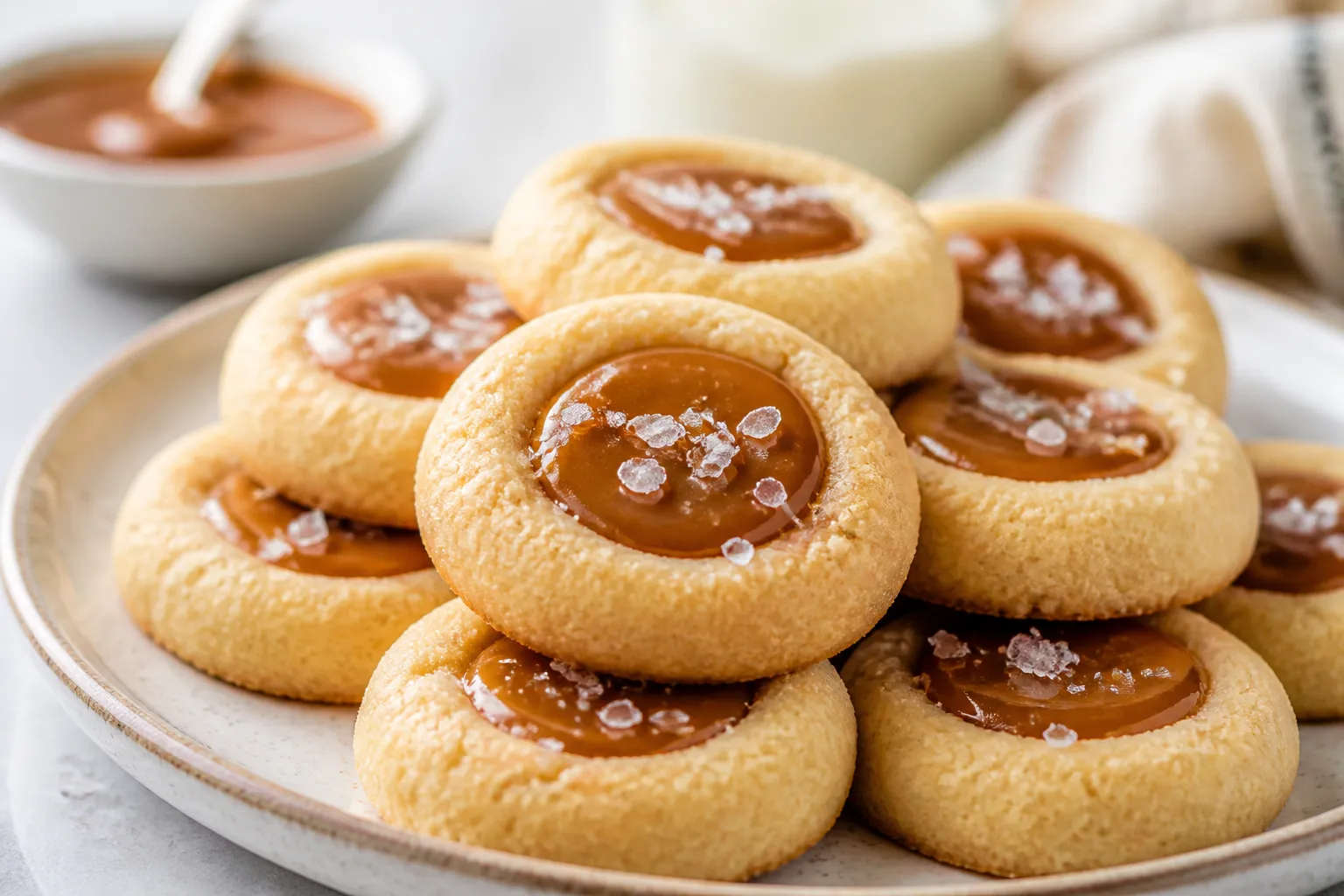
Salted Caramel Thumbprint Cookies – Buttery, Chewy, and Perfectly Sweet-Salty
Ingredients
Method
- Prep the basics. Heat the oven to 350°F (175°C). Line two baking sheets with parchment paper. Set the egg and butter out so they’re not cold; this helps the dough come together smoothly.
- Cream the butter and sugar. In a large bowl, beat the softened butter and sugar until light and fluffy, about 2–3 minutes. Add the egg and vanilla, and beat until fully combined.
- Mix the dry ingredients. In a separate bowl, whisk the flour and fine sea salt. Add to the butter mixture and mix on low just until the dough comes together. Don’t overmix.
- Shape the cookies. Scoop 1-tablespoon portions (about 20–24 cookies). Roll into balls. If using nuts, roll the dough balls in chopped nuts to coat.
- Make the thumbprints. Place dough balls 2 inches apart. Press the center of each with your thumb or the back of a 1/2-teaspoon measure to form a deep well. If the dough cracks, gently press it back together.
- Bake. Bake for 10–12 minutes, until edges are set and just starting to color. The centers will puff a little; as soon as they’re out of the oven, gently press the wells again to deepen if needed. Let cool on the sheet for 5 minutes, then move to a rack.
- Make the caramel. In a small saucepan over low heat, combine the caramels, heavy cream, and butter. Stir until smooth and glossy, 3–5 minutes. Remove from heat and stir in vanilla.
- Fill the cookies. Spoon warm caramel into each well, just to the top. Work a few cookies at a time so the caramel stays pourable. If it thickens, warm it gently again.
- Finish with salt. Sprinkle each cookie with a small pinch of flaky sea salt while the caramel is still tacky. Let the caramel set at room temperature for 30–45 minutes, or refrigerate briefly to speed it up.
- Serve. Enjoy slightly warm for a soft, melty center, or fully cooled for a clean, chewy bite.
What Makes This Special

Salted caramel adds a balanced sweetness that never feels cloying, thanks to a finishing sprinkle of flaky sea salt. The cookie base is a tender, buttery shortbread that holds its shape but stays soft in the center.
A quick stovetop caramel gets spooned into each little well and sets with a glossy finish. Best of all, the recipe is beginner-friendly and scales easily for sharing.
Ingredients
- For the cookies:
- 1 cup (2 sticks/226 g) unsalted butter, softened
- 2/3 cup (135 g) granulated sugar
- 1 large egg, room temperature
- 1 1/2 teaspoons pure vanilla extract
- 2 1/4 cups (280 g) all-purpose flour
- 1/2 teaspoon fine sea salt
- Optional: 1/2 cup (50 g) finely chopped pecans or almonds for rolling
- For the caramel filling:
- 20 soft caramels (about 5.5–6 oz/155–170 g), unwrapped
- 3 tablespoons heavy cream
- 1 teaspoon unsalted butter
- 1/2 teaspoon pure vanilla extract
- Flaky sea salt, for topping
Instructions

- Prep the basics. Heat the oven to 350°F (175°C). Line two baking sheets with parchment paper.
Set the egg and butter out so they’re not cold; this helps the dough come together smoothly.
- Cream the butter and sugar. In a large bowl, beat the softened butter and sugar until light and fluffy, about 2–3 minutes. Add the egg and vanilla, and beat until fully combined.
- Mix the dry ingredients. In a separate bowl, whisk the flour and fine sea salt. Add to the butter mixture and mix on low just until the dough comes together.
Don’t overmix.
- Shape the cookies. Scoop 1-tablespoon portions (about 20–24 cookies). Roll into balls. If using nuts, roll the dough balls in chopped nuts to coat.
- Make the thumbprints. Place dough balls 2 inches apart.
Press the center of each with your thumb or the back of a 1/2-teaspoon measure to form a deep well. If the dough cracks, gently press it back together.
- Bake. Bake for 10–12 minutes, until edges are set and just starting to color. The centers will puff a little; as soon as they’re out of the oven, gently press the wells again to deepen if needed.
Let cool on the sheet for 5 minutes, then move to a rack.
- Make the caramel. In a small saucepan over low heat, combine the caramels, heavy cream, and butter. Stir until smooth and glossy, 3–5 minutes. Remove from heat and stir in vanilla.
- Fill the cookies. Spoon warm caramel into each well, just to the top.
Work a few cookies at a time so the caramel stays pourable. If it thickens, warm it gently again.
- Finish with salt. Sprinkle each cookie with a small pinch of flaky sea salt while the caramel is still tacky. Let the caramel set at room temperature for 30–45 minutes, or refrigerate briefly to speed it up.
- Serve. Enjoy slightly warm for a soft, melty center, or fully cooled for a clean, chewy bite.
Keeping It Fresh
These cookies keep well at room temperature in an airtight container for 4–5 days.
Place parchment between layers to prevent sticking. If your kitchen runs warm, refrigerate them and bring to room temp before serving.
For longer storage, freeze the baked, unfilled cookies for up to 2 months. Thaw, then add the caramel and salt the day you plan to serve for best texture.
You can also freeze fully finished cookies; just know the caramel may pick up a little condensation when thawing.

Why This is Good for You
While this is a treat, there are a few bright spots. A small cookie with satisfying fat from butter can be more filling than ultra-lean sweets, which helps with mindful portions. Sea salt heightens flavor, so you can enjoy big taste without extra sugar. And baking at home gives you control over ingredients—real butter, real vanilla, and no mystery syrups or oils.
Common Mistakes to Avoid
- Overbaking the cookies: They should be set and pale with lightly golden edges.
Overbaked cookies turn dry and crumbly.
- Shallow wells: If the indent is too shallow, the caramel won’t sit neatly and may slide off. Re-press after baking if needed.
- Caramel too hot or too thin: Overheating makes it runny and can soak into the cookie. Keep heat low and stir constantly.
- Skipping the salt type: Use flaky sea salt, not table salt.
Flakes melt on the tongue and deliver bursts of flavor without harshness.
- Working with cold butter: Cold butter won’t cream well, and your dough may crack more.
Variations You Can Try
- Chocolate shell finish: Drizzle melted dark chocolate over the set caramel or dip half the cookie for a snappy contrast.
- Espresso caramel: Stir 1/2 teaspoon instant espresso into the caramel for a subtle coffee note.
- Brown sugar dough: Swap half the granulated sugar for light brown sugar to add warmth and a hint of molasses.
- Toasted coconut coat: Roll dough balls in finely shredded toasted coconut before baking for texture and aroma.
- Apple cider caramel: Reduce 1/4 cup apple cider to 1 tablespoon and stir into the caramel for fall flavor.
- Gluten-free option: Use a 1:1 gluten-free all-purpose flour blend with xanthan gum; chill the dough 30 minutes to help it hold shape.
FAQ
Can I make the dough ahead?
Yes. Wrap the dough tightly and refrigerate for up to 48 hours. If it’s too firm to scoop, let it rest at room temperature for 20–30 minutes until pliable.
What if I prefer homemade caramel?
Go for it.
Make a dry caramel with sugar, finish with warm cream and butter, and a pinch of salt. Aim for a thick, spoonable consistency so it sits neatly in the wells.
My cookies cracked when I made the indent. What should I do?
Gently press cracks back together with your fingers.
Slight cracking is normal and won’t affect taste. If the dough is crumbly, it may be too cold or too dry—let it warm slightly or mix a touch more until smooth.
How do I keep the caramel from getting too hard?
Use enough cream and keep the ratio right. The extra fat from the cream and butter keeps the caramel chewy.
Avoid overheating, which can make it stiff once cooled.
Can I use salted butter?
You can, but reduce or omit the added fine sea salt in the dough. Still finish with flaky sea salt to get that signature pop on top.
Do these ship well?
Yes, if packed carefully. Let the caramel fully set, layer with parchment, and cushion the box.
Choose cooler weather for shipping to avoid melting.
How big should the indent be?
A deep well about 1/2 teaspoon in volume is ideal. The back of a 1/2-teaspoon measure makes quick, uniform indents.
Can I double the recipe?
Absolutely. Use two ovens or rotate racks halfway through baking for even results.
Keep the caramel in a warm spot so it stays spoonable while you work.
What’s the best way to rewarm the caramel?
Low and slow on the stovetop is safest. You can also microwave in short 10–15 second bursts, stirring between each to prevent overheating.
How do I prevent the bottoms from over-browning?
Use light-colored baking sheets and parchment. If your oven runs hot, reduce the temperature by 10–15°F and extend the bake time slightly.
In Conclusion
Salted Caramel Thumbprint Cookies bring together buttery shortbread and lush caramel in a small, satisfying package.
They’re simple to make, easy to customize, and always a hit. Keep a batch on hand for guests, gifts, or a well-earned treat with coffee. With just a few smart steps and a sprinkle of flaky salt, you’ll have a cookie that looks polished and tastes unforgettable.
Printable Recipe Card
Want just the essential recipe details without scrolling through the article? Get our printable recipe card with just the ingredients and instructions.
About the Author

Brandon D
Blogger/Fitness & Wellness Coach
I create quick, healthy, family-friendly recipes that make dinner simple, delicious, and stress-free.