Prep your tools. Line two baking sheets with parchment paper.
Have plastic wrap ready for chilling the dough. If your kitchen is warm, chill the baking sheets while you make the dough for extra insurance against spreading.
Cream the butter and sugar. In a large bowl, beat the softened butter and powdered sugar until smooth and creamy, about 1–2 minutes. You’re not going for super light and fluffy—just well combined and silky.
Flavor the base. Mix in the vanilla and orange zest until the zest is evenly distributed and fragrant.
This step helps release the oils from the zest into the butter.
Add dry ingredients. In a separate bowl, whisk the flour and salt. Add this to the butter mixture. Beat on low just until a soft dough forms.
Avoid overmixing; once the flour disappears, stop.
Fold in cranberries. Stir in the chopped dried cranberries with a spatula. Chopping them ensures even distribution and cleaner slices later.
Shape and chill. Divide the dough in half. Roll each portion into a log about 2 inches in diameter.
If using coarse sugar, sprinkle it on your work surface and roll the logs to coat the edges. Wrap tightly in plastic and chill for at least 1–2 hours, or freeze for 30–40 minutes until very firm.
Preheat the oven. Set to 325°F (165°C). The lower temperature encourages even baking and a tender crumb.
Slice the cookies. Unwrap the chilled logs.
Use a sharp knife to cut 1/4-inch thick rounds, rotating the log slightly every few slices to keep it from flattening. If any slices crumble, just press them back together.
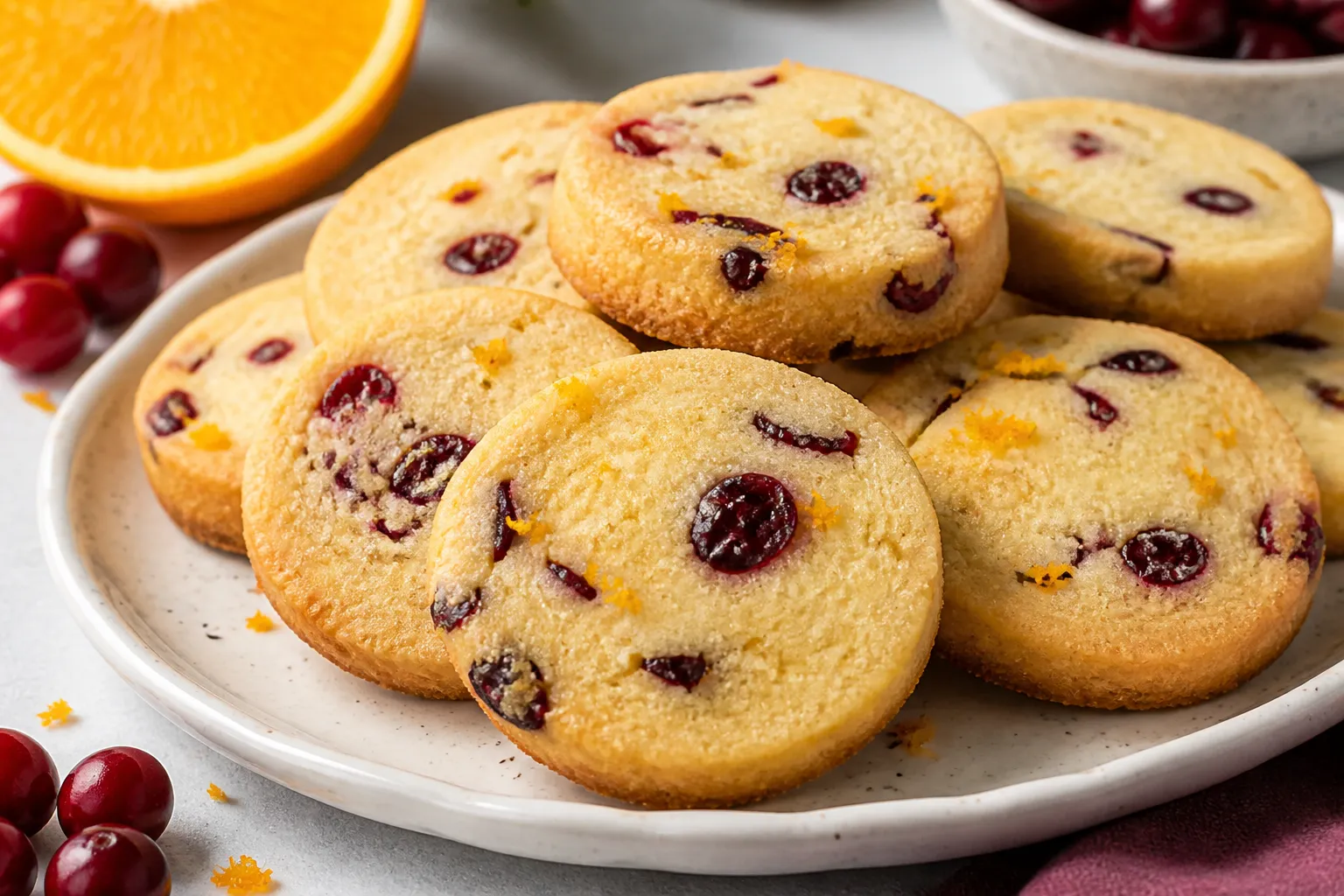
Bake. Arrange the slices 1–2 inches apart on the lined sheets. Bake 12–16 minutes, until the edges look set and just barely golden.
Shortbread should not brown deeply.
Cool. Let cookies rest on the baking sheet for 5 minutes, then transfer to a wire rack to cool completely. They firm up as they cool.
Optional glaze. Whisk powdered sugar with enough orange juice to make a pourable glaze. Drizzle over cooled cookies and let set 20–30 minutes before storing.