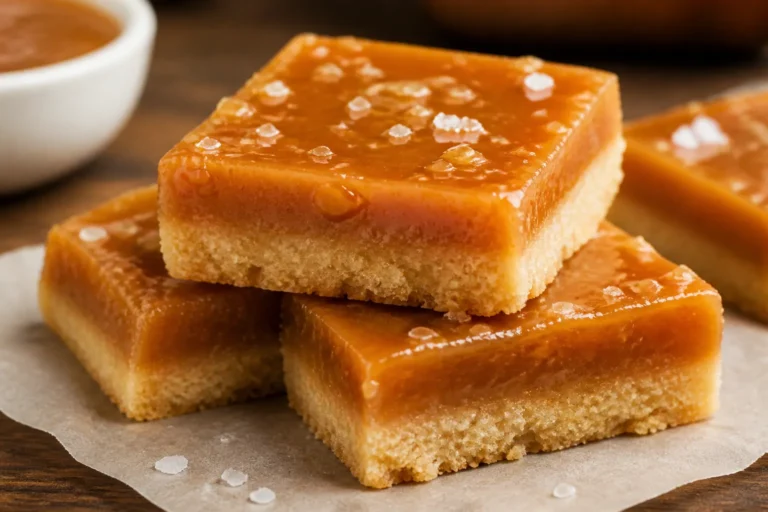
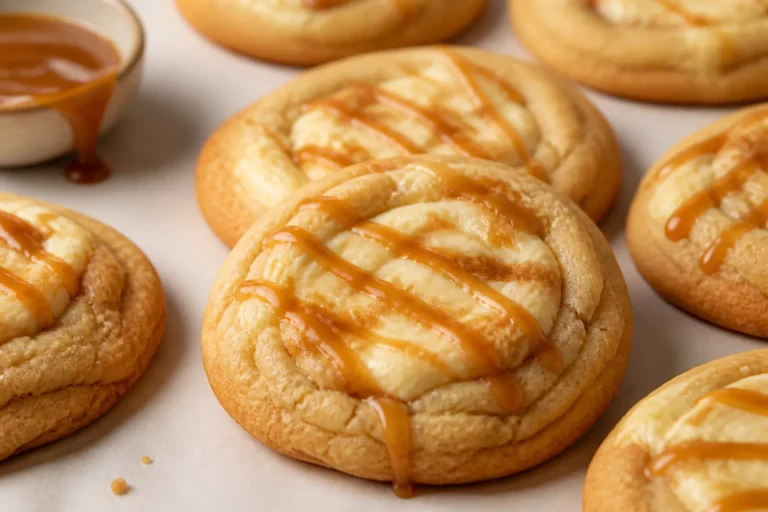
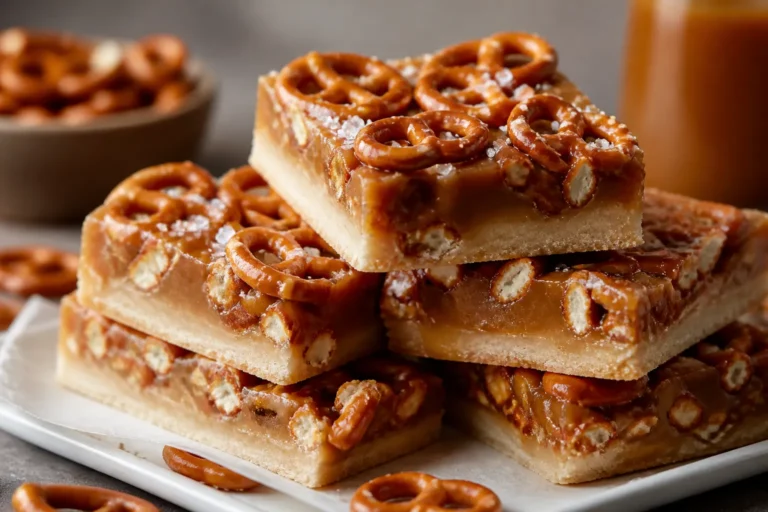
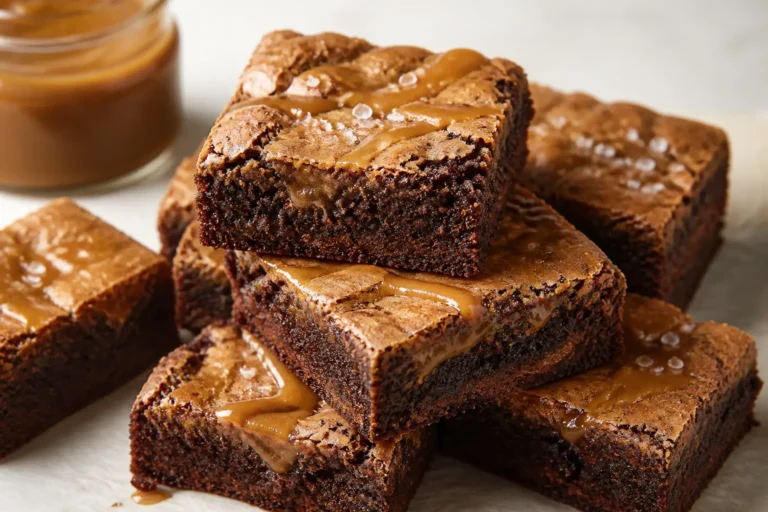
Salted Caramel Fudge – Rich, Buttery, and Perfectly Balanced
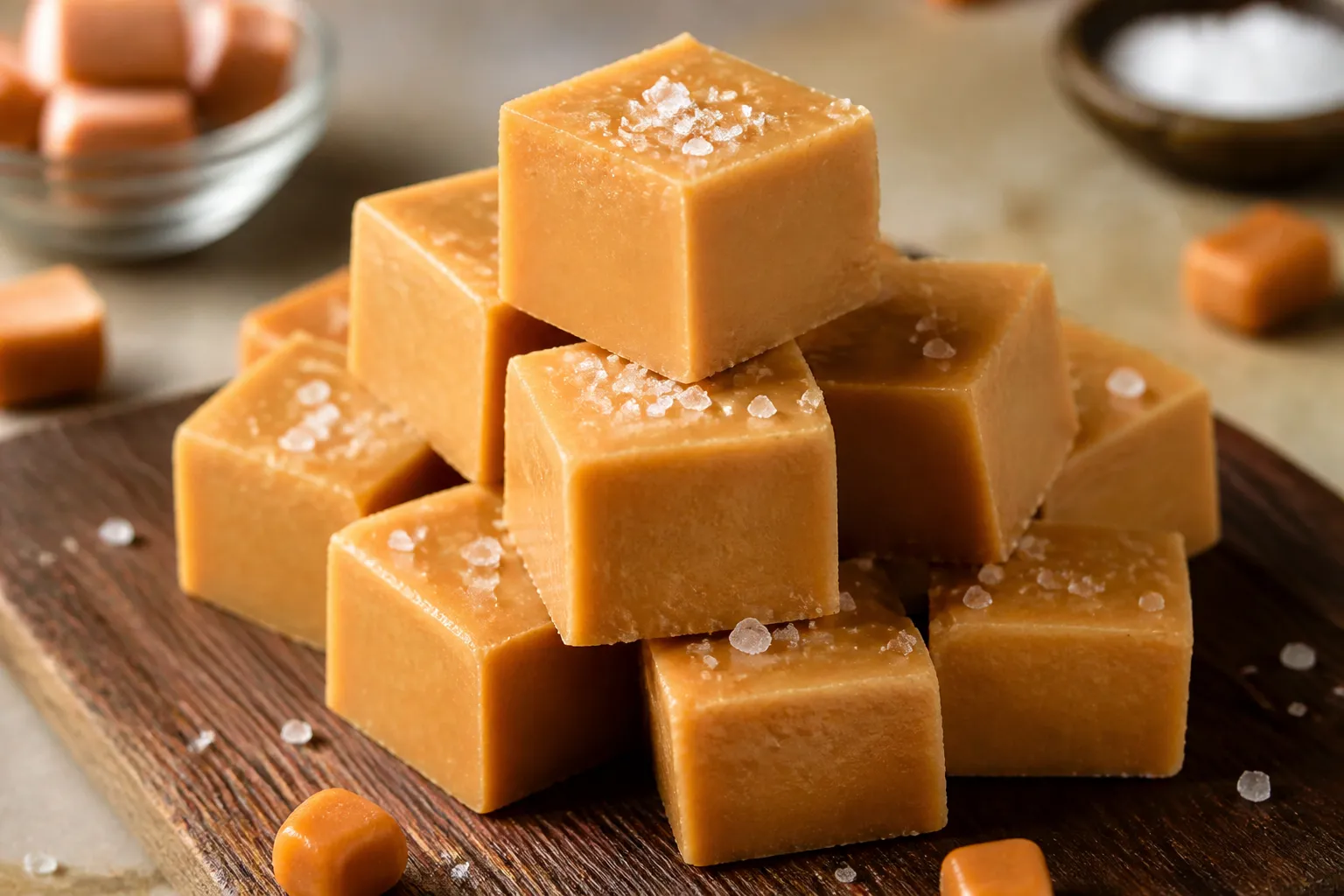
Salted caramel fudge is one of those treats that feels extra special without being fussy. It’s smooth, buttery, and melts in your mouth with just the right pop of sea salt. This version is simple enough for beginners, yet impressive enough for gifting or parties.
You don’t need a candy thermometer if you follow the cues closely, and the ingredients are easy to find. If you love classic fudge but want a modern twist, this is the one to make.
Ingredients
Method
- Prep your pan: Line an 8x8-inch (20x20 cm) baking pan with parchment, leaving overhang for easy lifting. Lightly grease the parchment.
- Make the caramel: In a medium, heavy-bottomed saucepan, add sugar and water. Stir gently to moisten the sugar, then heat over medium without stirring. Cook until the syrup turns a deep amber, about 8–10 minutes. If crystals form on the sides, brush with a wet pastry brush.
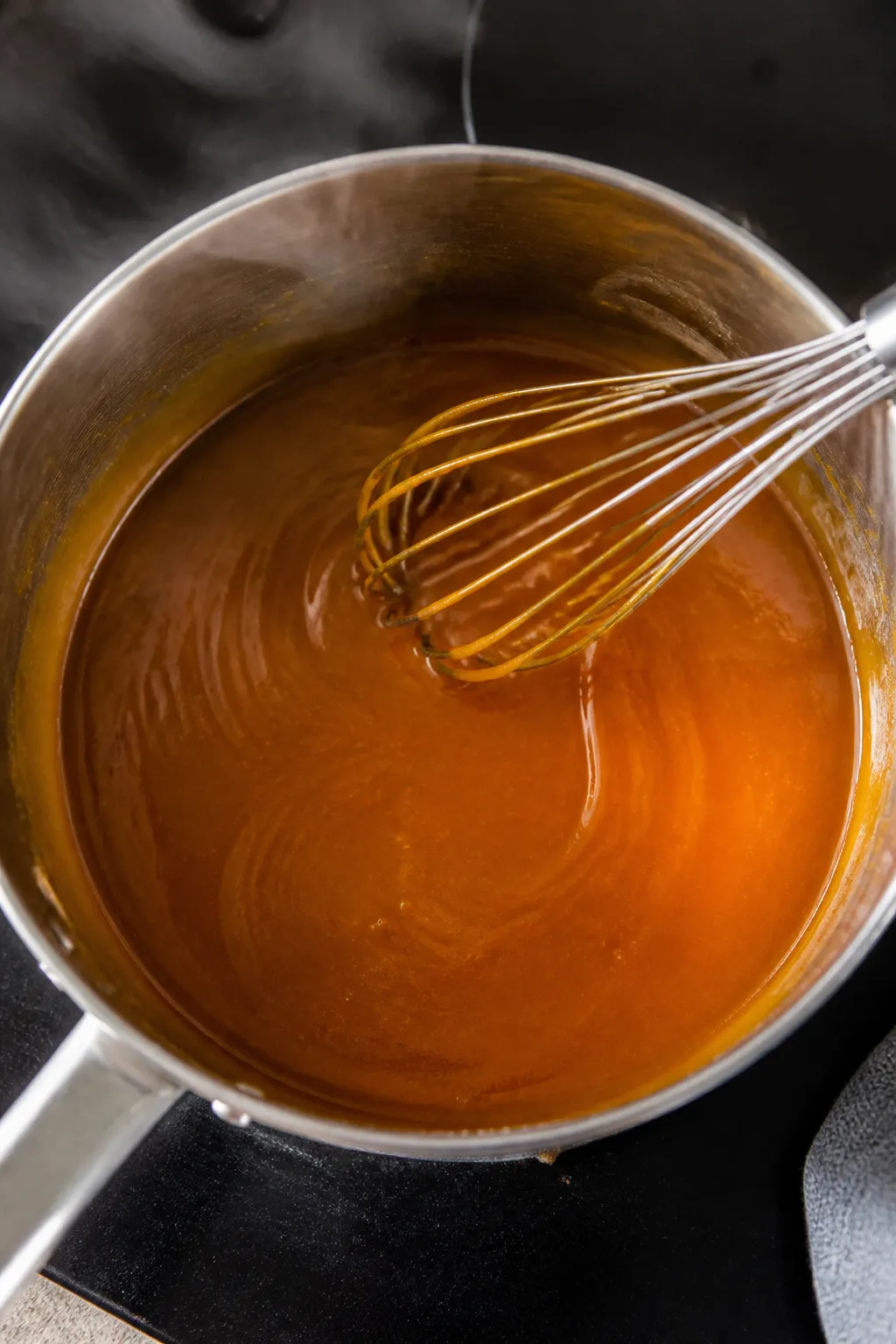
- Deglaze with cream: Remove the pan from heat and carefully whisk in the heavy cream. The mixture will bubble vigorously—keep whisking until smooth.
- Add condensed milk and butter: Return to medium-low heat. Stir in the sweetened condensed milk and butter. Cook, stirring constantly, until the mixture thickens and pulls slightly from the sides, 5–7 minutes. It should be glossy and lava-like.
- Flavor it: Take the pan off the heat. Stir in vanilla and 1 teaspoon flaky sea salt (and fine salt if using). Taste carefully—add a pinch more fine salt if you want a bolder salted note.
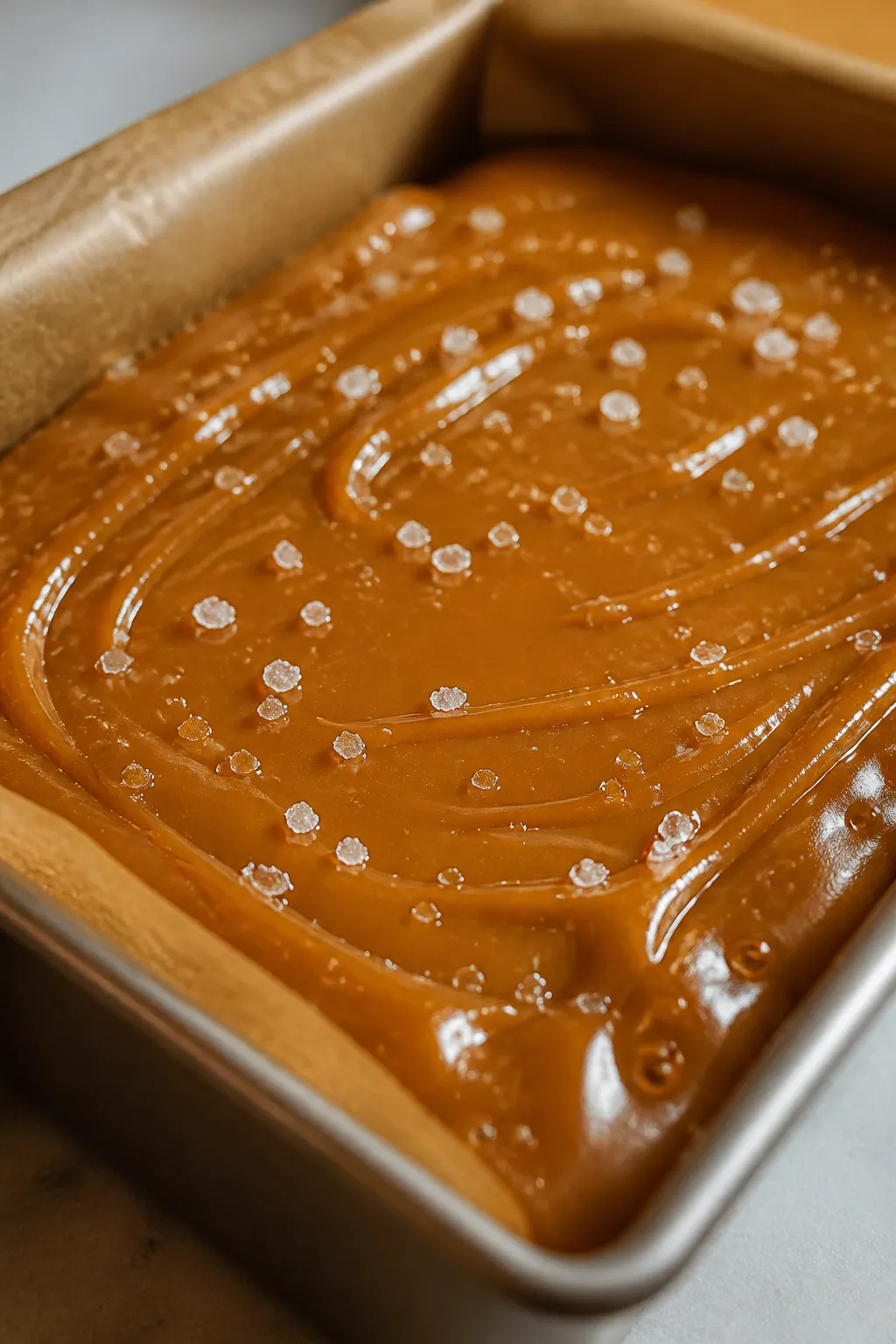
- Pour and smooth: Scrape the mixture into the prepared pan and smooth the top with an offset spatula. Tap the pan gently on the counter to release air bubbles.
- Add finishing salt: After 2–3 minutes, sprinkle a little more flaky sea salt on top. This helps the salt sit on the surface without melting in.
- Set and chill: Let the fudge cool at room temperature for 30 minutes, then refrigerate for 2–3 hours, or until firm enough to cut.
- Slice cleanly: Lift the fudge out using the parchment. Use a sharp knife warmed under hot water and wiped dry to cut into neat squares.
- Serve: Keep the pieces cool until serving for the best texture. A little goes a long way.
What Makes This Recipe So Good
- Balanced flavor: The sweetness of caramel gets a lift from flaky sea salt, so each bite is rich but not cloying.
- Ultra-creamy texture: Sweetened condensed milk and butter create a silky, smooth finish that sets beautifully.
- No tricky candy stages: This is a straightforward stovetop fudge that comes together fast with minimal stress.
- Great for gifting: It slices cleanly, holds its shape well, and looks pretty with a sprinkle of salt on top.
- Make-ahead friendly: Keeps well in the fridge and freezer, so you can prep it days or weeks ahead.
What You’ll Need
- 1 cup (200 g) granulated sugar – For making the caramel base.
- 1/4 cup (60 ml) water – Helps the sugar dissolve evenly.
- 1/2 cup (120 ml) heavy cream – Adds richness and smooth texture.
- 14 oz (397 g) sweetened condensed milk – The key to creamy, fail-safe fudge.
- 1/2 cup (115 g) unsalted butter, cut into pieces – For body and gloss.
- 1 teaspoon vanilla extract – Rounds out the caramel flavor.
- 1 teaspoon flaky sea salt, plus extra for topping – For that signature salted finish.
- Optional: 1/2 teaspoon fine sea salt (if you prefer a slightly saltier base)
- Optional add-ins: Toasted pecans, mini chocolate chips, or a swirl of peanut butter.
Step-by-Step Instructions
- Prep your pan: Line an 8×8-inch (20×20 cm) baking pan with parchment, leaving overhang for easy lifting. Lightly grease the parchment.
- Make the caramel: In a medium, heavy-bottomed saucepan, add sugar and water.
Stir gently to moisten the sugar, then heat over medium without stirring. Cook until the syrup turns a deep amber, about 8–10 minutes. If crystals form on the sides, brush with a wet pastry brush.
- Deglaze with cream: Remove the pan from heat and carefully whisk in the heavy cream.
The mixture will bubble vigorously—keep whisking until smooth.
- Add condensed milk and butter: Return to medium-low heat. Stir in the sweetened condensed milk and butter. Cook, stirring constantly, until the mixture thickens and pulls slightly from the sides, 5–7 minutes.
It should be glossy and lava-like.
- Flavor it: Take the pan off the heat. Stir in vanilla and 1 teaspoon flaky sea salt (and fine salt if using). Taste carefully—add a pinch more fine salt if you want a bolder salted note.
- Pour and smooth: Scrape the mixture into the prepared pan and smooth the top with an offset spatula.
Tap the pan gently on the counter to release air bubbles.
- Add finishing salt: After 2–3 minutes, sprinkle a little more flaky sea salt on top. This helps the salt sit on the surface without melting in.
- Set and chill: Let the fudge cool at room temperature for 30 minutes, then refrigerate for 2–3 hours, or until firm enough to cut.
- Slice cleanly: Lift the fudge out using the parchment. Use a sharp knife warmed under hot water and wiped dry to cut into neat squares.
- Serve: Keep the pieces cool until serving for the best texture.
A little goes a long way.
Storage Instructions
- Room temperature: Store in an airtight container for up to 3 days in a cool spot. Avoid direct sunlight or warm rooms.
- Refrigerator: Keeps well for 2 weeks. Layer pieces with parchment to prevent sticking.
- Freezer: Wrap tightly and freeze for up to 2 months.
Thaw in the fridge overnight before serving.
- Gifting tip: Pack in small boxes with wax paper dividers. Add the finishing salt just before gifting if humidity is high.

Health Benefits
Salted caramel fudge is a treat, not a health food, but you can still note a few positives. A small square is satisfying, which can help with portion control compared to snacks you keep reaching for.
Butter and cream provide fat-soluble vitamins like A and D in small amounts. If you use nuts as an add-in, you’ll get a little protein and healthy fats for better satiety. That said, it’s high in sugar and calories, so enjoy it mindfully and pair it with balanced meals.
Pitfalls to Watch Out For
- Grainy texture: Stirring the sugar while it’s first melting can cause crystallization.
Let it melt undisturbed until amber, and avoid scraping the sides.
- Burnt caramel: Caramel goes from perfect to burned fast. Watch the color closely and remove from heat at deep amber, not dark brown.
- Split or greasy mixture: Overheating after adding butter and condensed milk can separate the fats. Keep the heat medium-low and stir constantly.
- Too soft or too firm: If undercooked, it may not set; if overcooked, it can turn chewy.
Look for a thick, glossy mixture that slowly falls off the spoon.
- Salt overload: Flaky sea salt is more delicate than table salt. Use flaky for topping and measure carefully if adding fine salt to the base.
Alternatives
- Microwave method: Skip the dry caramel and melt butter with sweetened condensed milk and soft caramels in the microwave, stirring every 30 seconds until smooth. Add salt and vanilla at the end.
- Brown sugar shortcut: Replace the caramel step with 1 cup packed light brown sugar.
Cook with butter and condensed milk until thick, then finish with salt and vanilla. Flavor is less deep but still delicious.
- Dairy-free: Use coconut sweetened condensed milk and a rich dairy-free butter alternative. Swap heavy cream with full-fat coconut milk.
Expect a subtle coconut note.
- Chocolate-swirled: Drizzle melted dark chocolate over the poured fudge and swirl with a toothpick. The bitterness balances the sweetness.
- Nutty crunch: Fold in 1/2 to 3/4 cup toasted pecans, almonds, or hazelnuts just before pouring into the pan.
- Espresso kick: Stir in 1–2 teaspoons instant espresso powder with the vanilla for a mocha-caramel vibe.
FAQ
Do I need a candy thermometer for this fudge?
No. This recipe relies on visual cues and texture.
If you prefer certainty, you can cook the caramel stage to around 345°F (175°C) and the final mixture to about 235–240°F (113–115°C), but it’s not required.
Why did my fudge turn grainy?
Most often, sugar crystals formed early on. Avoid stirring once the sugar dissolves, and don’t scrape crystallized bits from the sides of the pan. Using a clean, heavy-bottomed saucepan also helps.
Can I use store-bought caramel sauce?
Yes, but choose a thick, high-quality sauce.
You’ll still cook it with condensed milk and butter to reach a fudge-like consistency. Thin or watery sauces can make the fudge too soft.
What kind of salt works best?
Use flaky sea salt for topping—its light, crisp texture stands out. For salting the base, use fine sea salt sparingly.
Avoid iodized table salt on top; it tastes sharper and melts into the surface.
How do I fix fudge that didn’t set?
Scrape it back into a saucepan, add a splash of cream, and cook over medium-low heat, stirring until thick and glossy. Re-pour and chill again. Alternatively, use it as a warm caramel sauce over ice cream.
Can I double the recipe?
Yes, in a 9×13-inch pan.
Use a large, heavy pot to prevent scorching and extend the stirring time slightly. Watch the caramel color closely, as larger batches can darken faster at the edges.
Is this fudge suitable for mailing?
It can be, if the weather is cool. Wrap each piece, pack tightly in a tin, and include cold packs if shipping warm-to-hot climates.
Priority shipping helps preserve texture.
Wrapping Up
Salted caramel fudge hits that sweet spot between decadent and balanced. With a few simple ingredients and a bit of attention, you’ll get glossy, silky squares that taste like a treat from a fancy candy shop. Keep a stash for guests, wrap some for friends, or enjoy a piece with coffee after dinner.
Once you make it, you’ll see how easy it is to keep this recipe in your regular rotation.
Printable Recipe Card
Want just the essential recipe details without scrolling through the article? Get our printable recipe card with just the ingredients and instructions.
About the Author

Brandon D
Blogger/Fitness & Wellness Coach
I create quick, healthy, family-friendly recipes that make dinner simple, delicious, and stress-free.