Low Calorie Chicken Stir Fry – Quick, Fresh, and Weeknight-Friendly
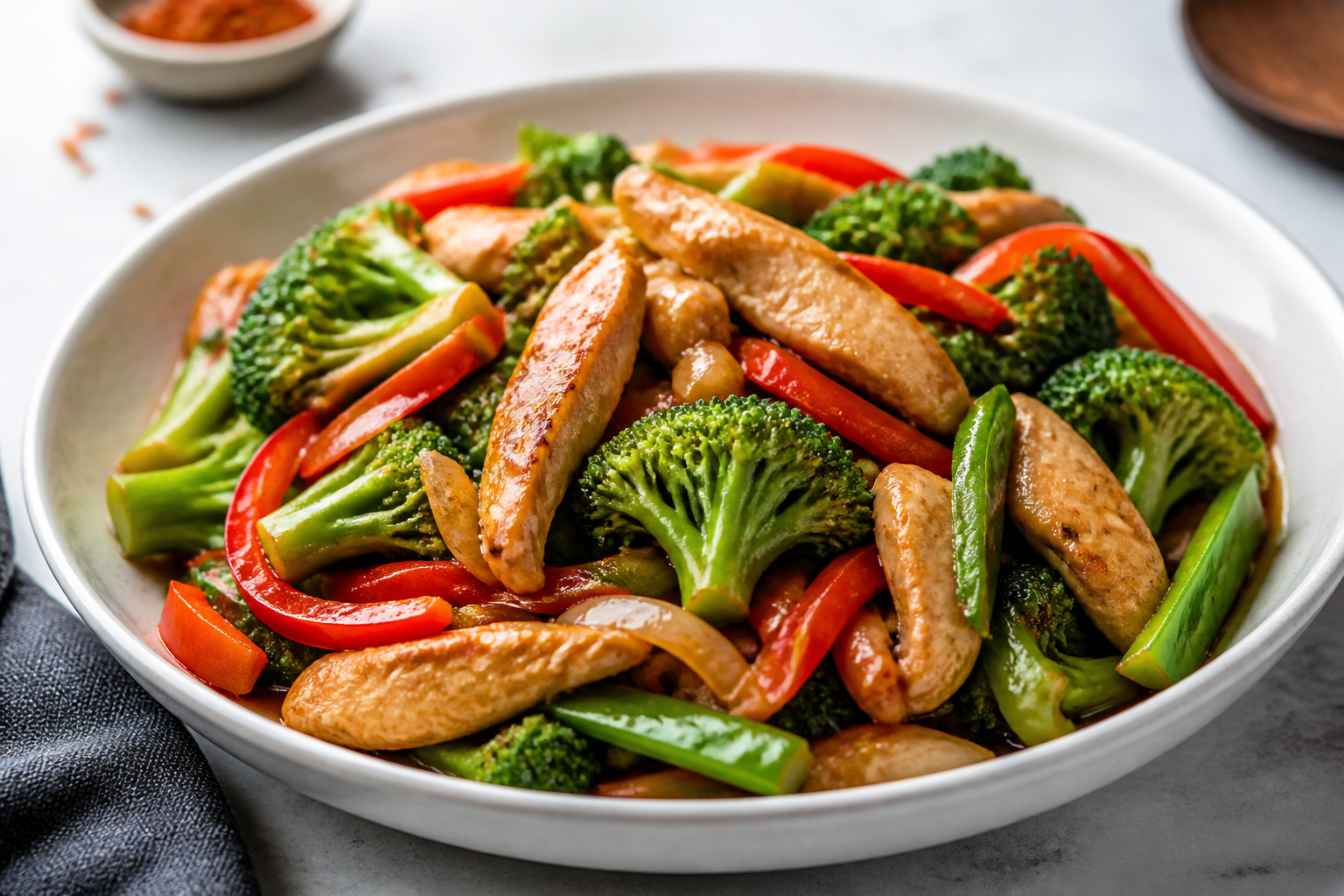
This low calorie chicken stir fry is the kind of dinner you can count on when you’re hungry, short on time, and want something light but satisfying. It’s loaded with crisp vegetables, lean chicken, and a bright, savory sauce that coats everything without drowning it. You get color, texture, and flavor in every bite.
FREE 7-Day Easy Dinner Reset
Save time, eat healthier, and take the stress out of dinner. Get a full week of easy healthy dinners delivered straight to your inbox.
It’s easy to customize with whatever you have in the fridge, and it reheats well for lunch the next day. If you’re trying to keep meals lighter while still eating well, this one belongs in your weekly rotation.
Ingredients
Method
- Prep the chicken and veggies: Slice the chicken thinly against the grain. Cut all vegetables into bite-size pieces. Keep garlic and ginger separate so they don’t burn during the stir fry.
- Make the sauce: In a bowl or measuring cup, whisk soy sauce, rice vinegar, oyster sauce, sesame oil, honey, red pepper flakes, broth, and cornstarch until smooth. Reserve 2 tablespoons of this mixture for a quick chicken marinade.
- Marinate the chicken (quickly): Toss the sliced chicken with the reserved 2 tablespoons of sauce. Let it sit while you heat the pan and organize the vegetables. Even 5 minutes helps.
- Heat the pan: Place a large nonstick skillet or wok over medium-high heat. Add 2 teaspoons oil and swirl to coat. You want the pan hot so the chicken sears and the veggies stay crisp.
- Cook the chicken: Add the chicken in a single layer. Stir only as needed to cook through, about 4 to 5 minutes. Remove to a plate. Don’t crowd the pan; work in two batches if necessary.
- Stir fry the veggies: Add the remaining 1 teaspoon oil to the pan. Add onion, carrot, and broccoli. Cook 2 to 3 minutes, stirring frequently. Add bell pepper and snap peas; cook another 2 minutes until crisp-tender.
- Add aromatics: Push the veggies to the sides. Add garlic and ginger to the center and cook 20 to 30 seconds until fragrant, not browned.
- Combine and sauce: Return the chicken and any juices to the pan. Whisk the sauce again (cornstarch settles), then pour it in. Stir constantly for 30 to 60 seconds as it thickens and lightly coats everything.
- Taste and adjust: If you prefer more brightness, add a small splash of rice vinegar or a squeeze of lime. For heat, add a pinch more red pepper flakes.
- Serve: Top with green onions and sesame seeds. Spoon over cauliflower rice or a modest scoop of brown rice to keep calories in check.
What Makes This Recipe So Good
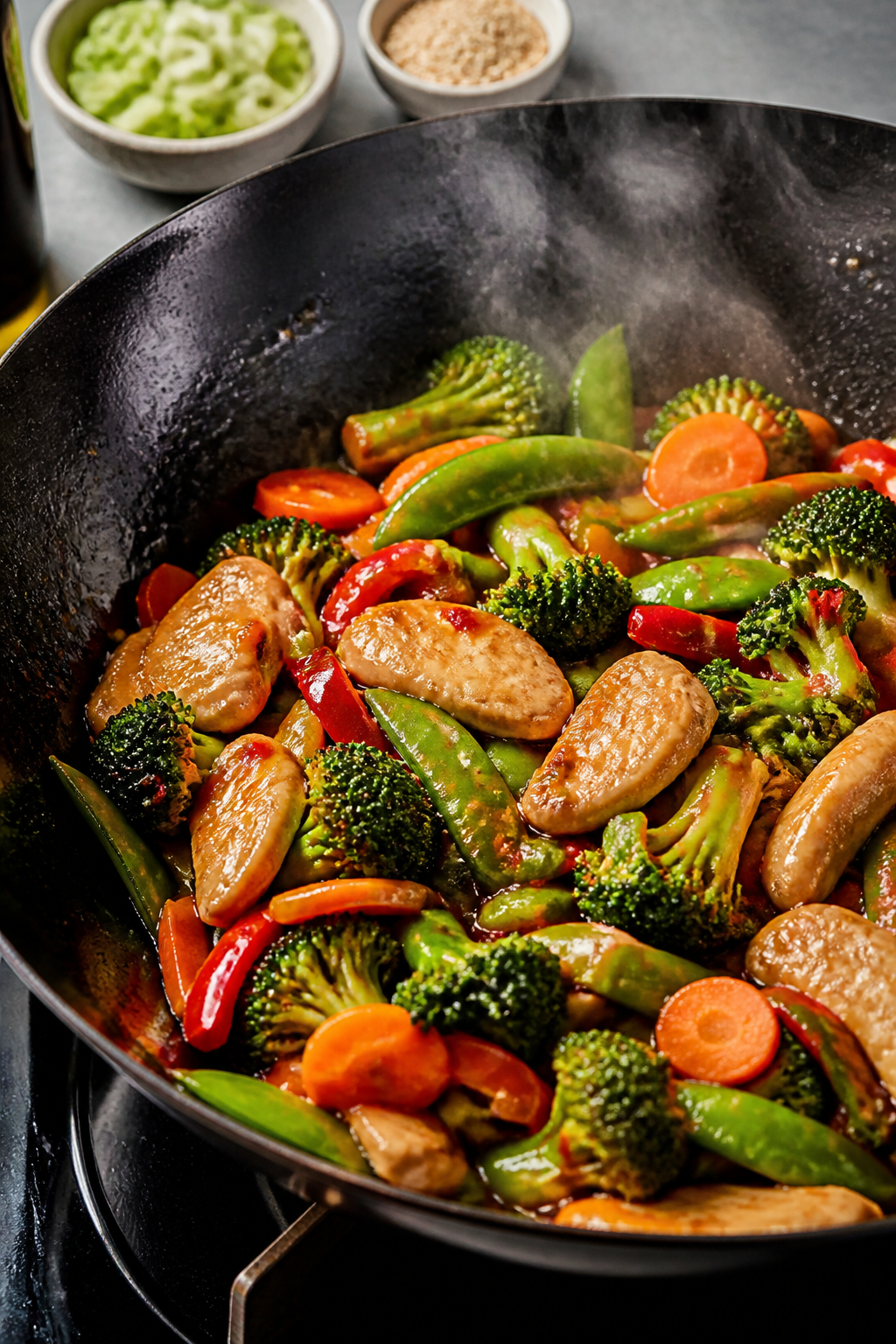
- Light yet filling: Lean chicken breast and a big mix of veggies give you plenty of protein and fiber for very few calories.
- Fast from start to finish: With a quick marinade and high-heat cooking, dinner is on the table in about 25 minutes.
- Balanced flavor: A simple sauce made with soy, garlic, ginger, and a touch of sweetness hits salty, savory, and slightly sweet notes.
- Flexible: Swap in the vegetables you like or need to use up. Broccoli, peppers, snap peas, or mushrooms all work.
- Meal-prep friendly: The components keep well, so you can portion it out for easy lunches.
Ingredients
- 1 pound boneless, skinless chicken breast, thinly sliced
- 1 red bell pepper, thinly sliced
- 1 small head broccoli, cut into small florets
- 1 medium carrot, peeled and thinly sliced on the bias
- 1 cup sugar snap peas, trimmed
- 1 small yellow onion, thinly sliced
- 2 cloves garlic, minced
- 1 tablespoon fresh ginger, minced
- 2 green onions, thinly sliced (for garnish)
- 1 tablespoon toasted sesame seeds (optional, for garnish)
- 1 tablespoon avocado oil or canola oil (divided)
For the sauce/marinade:
- 3 tablespoons low-sodium soy sauce or tamari
- 1 tablespoon rice vinegar
- 1 tablespoon oyster sauce (or extra soy if avoiding)
- 1 teaspoon sesame oil
- 1 to 2 teaspoons honey or maple syrup (to taste)
- 1/4 teaspoon red pepper flakes or a dash of hot sauce (optional)
- 1/3 cup low-sodium chicken broth or water
- 2 teaspoons cornstarch
To serve (optional, for a low-calorie base):
- Steamed cauliflower rice, shirataki rice, or a small portion of brown rice
- Lime wedges for squeezing over the top
Step-by-Step Instructions
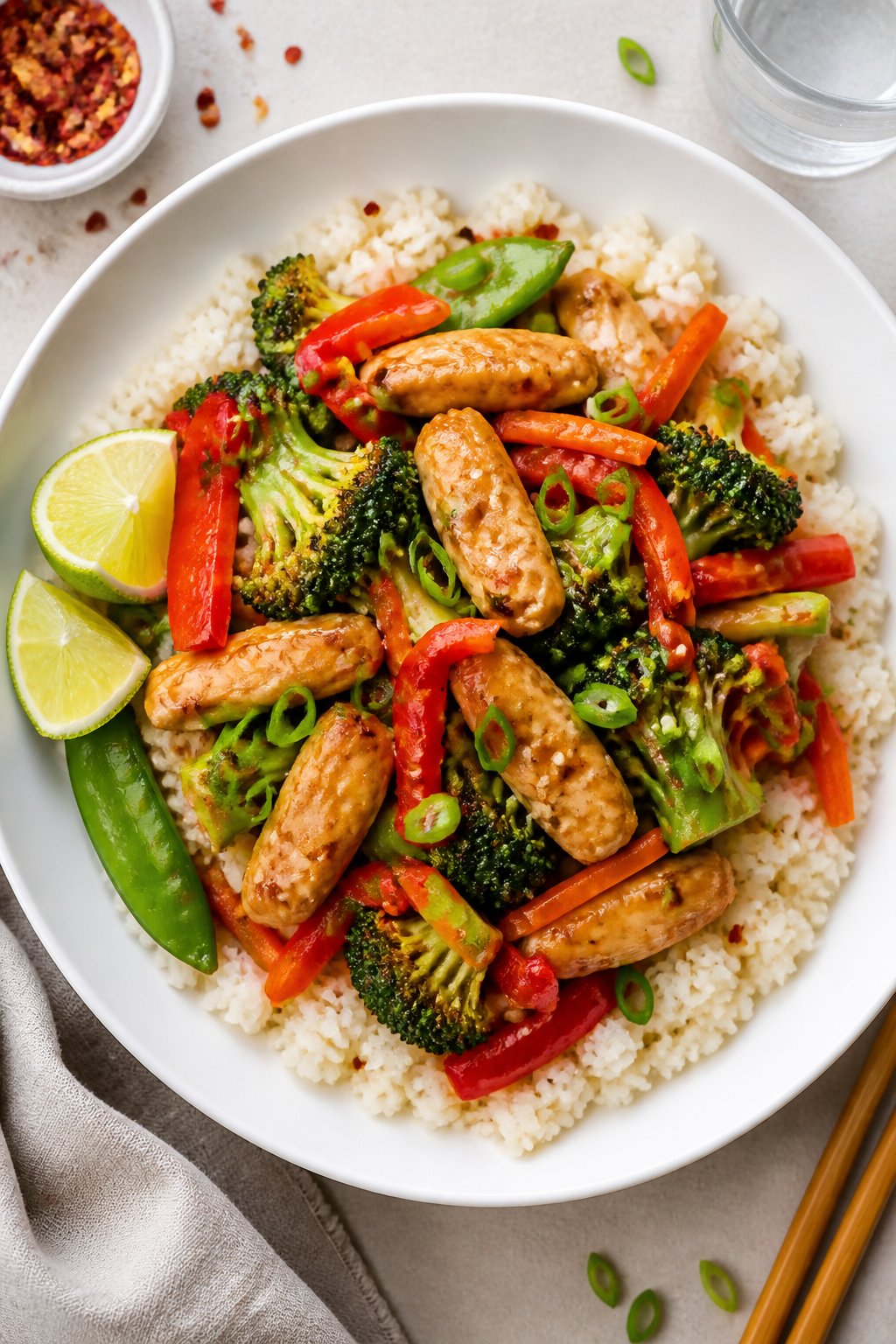
- Prep the chicken and veggies: Slice the chicken thinly against the grain.
Cut all vegetables into bite-size pieces. Keep garlic and ginger separate so they don’t burn during the stir fry.
- Make the sauce: In a bowl or measuring cup, whisk soy sauce, rice vinegar, oyster sauce, sesame oil, honey, red pepper flakes, broth, and cornstarch until smooth. Reserve 2 tablespoons of this mixture for a quick chicken marinade.
- Marinate the chicken (quickly): Toss the sliced chicken with the reserved 2 tablespoons of sauce. Let it sit while you heat the pan and organize the vegetables.
Even 5 minutes helps.
- Heat the pan: Place a large nonstick skillet or wok over medium-high heat. Add 2 teaspoons oil and swirl to coat. You want the pan hot so the chicken sears and the veggies stay crisp.
- Cook the chicken: Add the chicken in a single layer.
Stir only as needed to cook through, about 4 to 5 minutes. Remove to a plate. Don’t crowd the pan; work in two batches if necessary.
- Stir fry the veggies: Add the remaining 1 teaspoon oil to the pan.
Add onion, carrot, and broccoli. Cook 2 to 3 minutes, stirring frequently. Add bell pepper and snap peas; cook another 2 minutes until crisp-tender.
- Add aromatics: Push the veggies to the sides.
Add garlic and ginger to the center and cook 20 to 30 seconds until fragrant, not browned.
- Combine and sauce: Return the chicken and any juices to the pan. Whisk the sauce again (cornstarch settles), then pour it in. Stir constantly for 30 to 60 seconds as it thickens and lightly coats everything.
- Taste and adjust: If you prefer more brightness, add a small splash of rice vinegar or a squeeze of lime.
For heat, add a pinch more red pepper flakes.
- Serve: Top with green onions and sesame seeds. Spoon over cauliflower rice or a modest scoop of brown rice to keep calories in check.
How to Store
- Refrigerator: Store in an airtight container for up to 4 days. Keep rice or cauliflower rice separate to prevent sogginess.
- Freezer: It freezes decently for up to 2 months, though veggies will soften.
Cool completely, portion, and label.
- Reheat: Warm in a skillet over medium heat with a splash of water or broth until hot. Microwave in 45-second bursts, stirring between, to avoid overcooking the chicken.
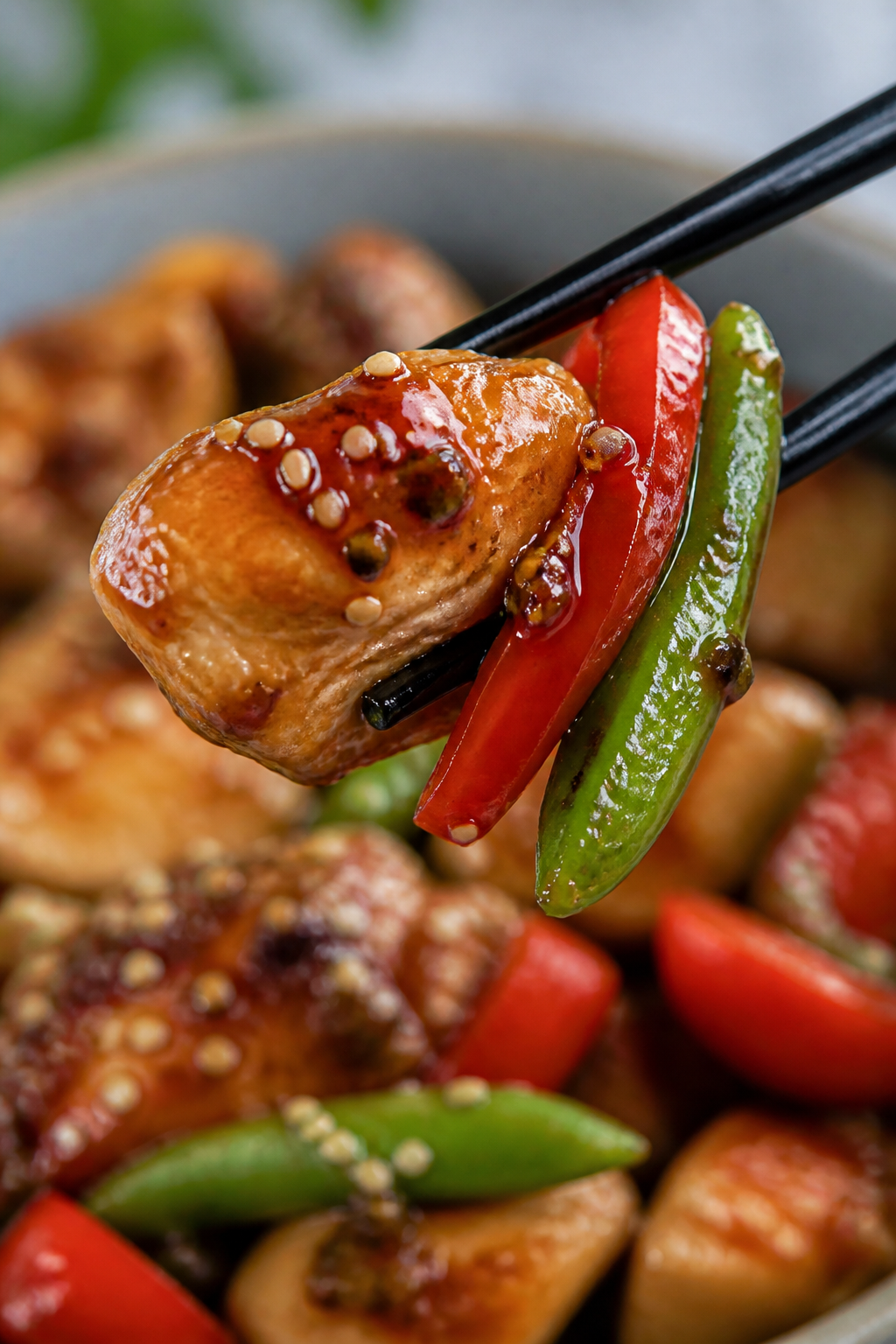
Why This is Good for You
- High in protein, lower in calories: Chicken breast is lean and helps keep you full. A generous veggie mix adds volume without much energy density.
- Fiber and micronutrients: Broccoli, peppers, carrots, and snap peas bring fiber, vitamin C, beta-carotene, and potassium.
- Better control over sodium and sugar: Using low-sodium soy and modest honey keeps the sauce flavorful without going overboard.
- Healthy cooking method: Stir frying uses minimal oil and short cooking times, which helps retain nutrients and texture.
What Not to Do
- Don’t overcrowd the pan: Too much food at once steams instead of sears.
Cook the chicken in batches if the pan is small.
- Don’t skip the quick marinade: Even a few minutes seasons the chicken and improves browning.
- Don’t overcook the vegetables: Pull them while they’re still crisp-tender. Soft veggies add calories nowhere and lose their appeal.
- Don’t forget to re-whisk the sauce: Cornstarch sinks fast. A quick whisk before pouring prevents lumps and uneven thickening.
- Don’t drench it in oil: Measure the oil.
A tablespoon is enough when your pan is properly preheated.
Recipe Variations
- Extra-lean swap: Use chicken tenderloins or turkey breast. Slice thin and cook quickly to keep it tender.
- All-veggie version: Replace chicken with firm tofu or edamame. Press tofu well, then sear until golden before adding vegetables.
- Citrus-ginger twist: Add 1 teaspoon orange zest and swap half the broth for fresh orange juice.
Reduce honey slightly to balance.
- Spicy garlic: Double the garlic, add chili-garlic sauce to the mix, and finish with a drizzle of chili oil (use lightly to keep calories lower).
- Low-carb base: Serve over cauliflower rice or zucchini noodles. Quick-sauté zoodles separately so they don’t water down the stir fry.
- Extra greens: Toss in a big handful of baby spinach or shredded cabbage in the last minute to wilt.
- Gluten-free: Use tamari or coconut aminos and a gluten-free oyster sauce alternative.
FAQ
How many calories are in a serving?
Need More Easy Dinner Ideas?
Get my FREE 7-Day Easy Dinner Reset and enjoy a full week of healthy dinners without the meal-planning stress.
Exact calories depend on your specific ingredients and portions, but a typical serving of this stir fry without rice comes in around 250 to 320 calories. Adding cauliflower rice keeps it very low, while a half-cup of cooked brown rice adds roughly 100 calories.
Can I make this without cornstarch?
Yes.
You can reduce the sauce on the stove until it naturally thickens a bit, or use 1 to 1.5 teaspoons arrowroot starch. If skipping thickener altogether, simmer the sauce a minute longer so it clings better.
What’s the best pan to use?
A carbon steel wok is ideal for high heat and quick searing, but a large nonstick skillet works very well. The key is preheating and not crowding the pan so you get some color instead of steaming.
How do I keep the chicken tender?
Slice it thinly, cook it hot and fast, and don’t overcook.
The quick marinade helps, and you can add a teaspoon of cornstarch to the chicken before searing for extra softness, a technique called velveting.
Which vegetables cook at the same speed?
Group firmer vegetables like broccoli, carrots, and onions to start, then add quick-cooking ones like bell peppers and snap peas later. This layering keeps everything crisp-tender at the same time.
Can I prep this ahead?
Absolutely. Slice the chicken and vegetables, and whisk the sauce up to 24 hours in advance.
Store each separately. When it’s time to cook, it comes together in minutes.
Is sesame oil necessary?
It’s not required, but a small amount adds a toasty aroma that makes the dish taste more complete. Keep it to a teaspoon to stay within low-calorie goals.
What can I use instead of oyster sauce?
Use an extra teaspoon of soy sauce plus a dash of fish sauce for depth, or a little hoisin for sweetness.
If you prefer vegetarian, try a mushroom-based stir fry sauce.
Final Thoughts
This low calorie chicken stir fry proves you don’t have to sacrifice flavor to eat lighter. With a hot pan, crisp vegetables, and a balanced sauce, it tastes fresh and satisfying every time. Keep the ingredients on hand, and you can pull it off on even the busiest nights.
Once you’ve made it once or twice, customize it to your taste and whatever’s in your crisper. Simple, colorful, and reliably good—that’s a weeknight win.
Printable Recipe Card
Want just the essential recipe details without scrolling through the article? Get our printable recipe card with just the ingredients and instructions.
About the Author

Brandon D
Blogger/Fitness & Wellness Coach
I create quick, healthy, family-friendly recipes that make dinner simple, delicious, and stress-free.
Loved This Recipe?
If you're looking for more simple, healthy dinners your family will actually eat, grab my FREE 7-Day Easy Dinner Reset. You'll get 7 easy dinner recipes, simple grocery lists, and a done-for-you plan that takes the stress out of mealtime.