Traditional Christmas Fruitcake – A Classic, Festive Loaf
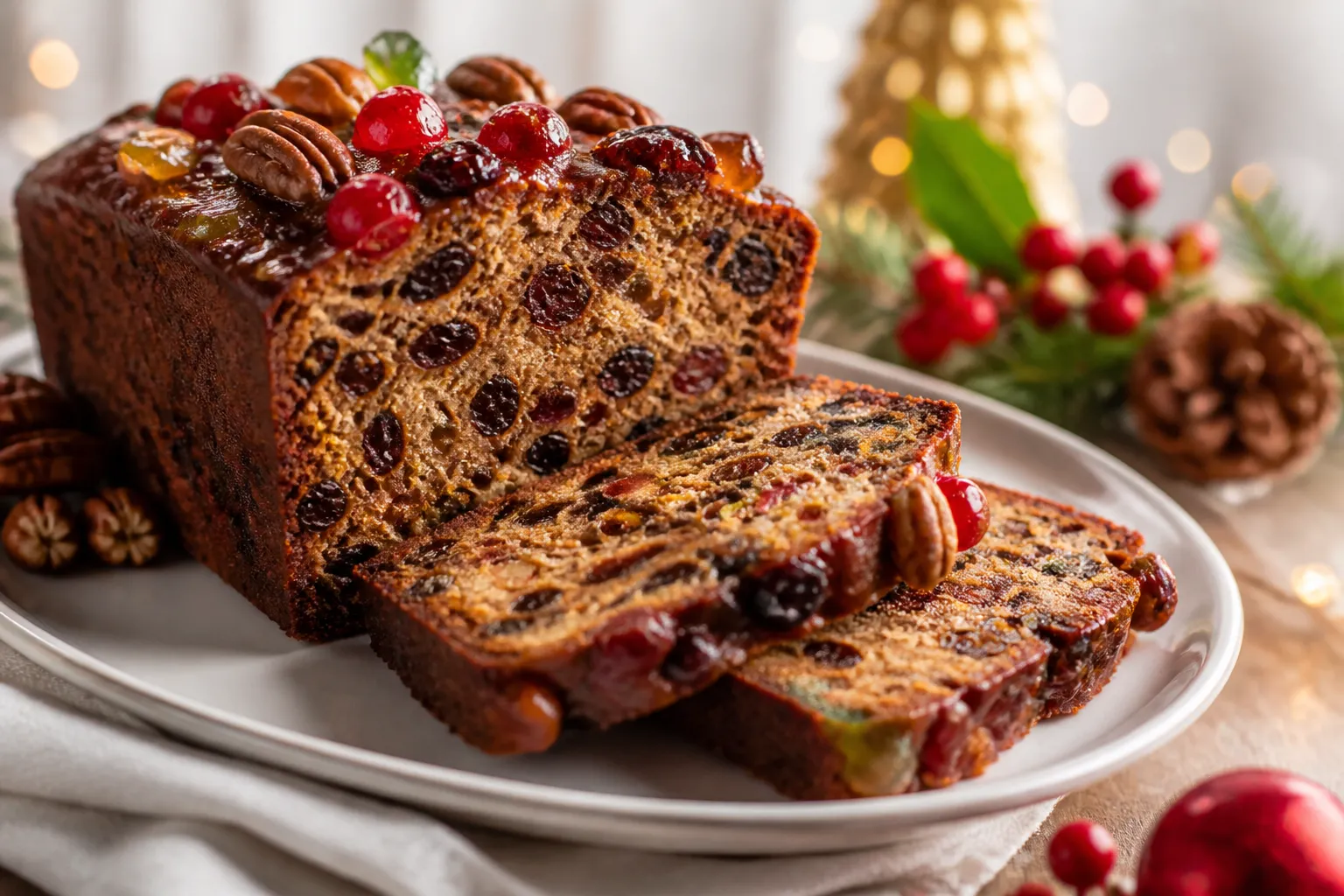
Christmas fruitcake has a reputation, but when it’s made well, it’s rich, moist, and wonderfully fragrant. This version leans classic: butter, brown sugar, warm spices, plenty of dried fruit, and a hint of brandy. It’s the kind you slice thin, serve with tea, and look forward to every year.
The process is simple and comforting, and the payoff is a beautiful loaf that keeps well and tastes even better over time.
Ingredients
Method
- Soak the fruit: In a bowl, combine 3 cups mixed dried fruits (raisins, sultanas, currants, chopped dates/apricots) and 1/2 cup chopped candied peel. Add 1/2 cup brandy, rum, or orange juice. Stir, cover, and let sit at least 2 hours, preferably overnight. This makes the fruit plump and prevents a dry cake.
- Prep the pan and oven: Heat the oven to 300°F (150°C). Butter a 9x5-inch loaf pan (or an 8-inch round, deep tin) and line with parchment on the bottom and sides. For extra protection, line the outside of the pan with a double layer of brown paper and tie it with string to guard the edges from over-browning.
- Mix the dry ingredients: In a bowl, whisk 2 cups all-purpose flour, 1 1/2 teaspoons baking powder, 1/2 teaspoon salt, 1 teaspoon cinnamon, 1/2 teaspoon nutmeg, 1/2 teaspoon ginger, and a pinch of cloves. Set aside.
- Cream butter and sugar: In a large bowl, beat 3/4 cup unsalted butter with 3/4 cup dark brown sugar until light and fluffy, 2–3 minutes. Beat in 2 tablespoons molasses for depth.
- Add eggs and flavorings: Beat in 3 large eggs, one at a time, scraping the bowl. Mix in 1 teaspoon vanilla (or 1/2 teaspoon vanilla plus 1/4 teaspoon almond extract) and the zest of 1 orange.
- Combine batter and fruit: Stir the dry mixture into the butter mixture until just combined. If the batter seems stiff, add 1–2 tablespoons milk to loosen slightly. Toss 1 cup chopped nuts with 2 tablespoons flour (this helps prevent sinking), then fold the nuts and the soaked fruit (and any remaining liquid) gently into the batter.
- Fill the pan: Spoon the batter into the prepared pan and level the top. Create a shallow trench down the center with the back of a spoon to encourage an even rise.
- Bake low and slow: Bake for 75–95 minutes, depending on the pan and oven. The cake is done when a skewer inserted in the center comes out with only a few moist crumbs and the top feels set. If the top darkens too quickly, tent with foil.
- Cool and feed: Let the cake cool in the pan for 20 minutes, then lift out to a wire rack. While warm, poke small holes over the top with a skewer and brush with 1–2 tablespoons brandy (or orange juice). Cool completely.
- Wrap and mature: Wrap the cooled cake in parchment, then in foil. Store in an airtight tin at cool room temperature. Feed with 1–2 tablespoons brandy once a week for 2–3 weeks before serving. This step is optional but highly recommended for a moist, aromatic loaf.
Why This Recipe Works
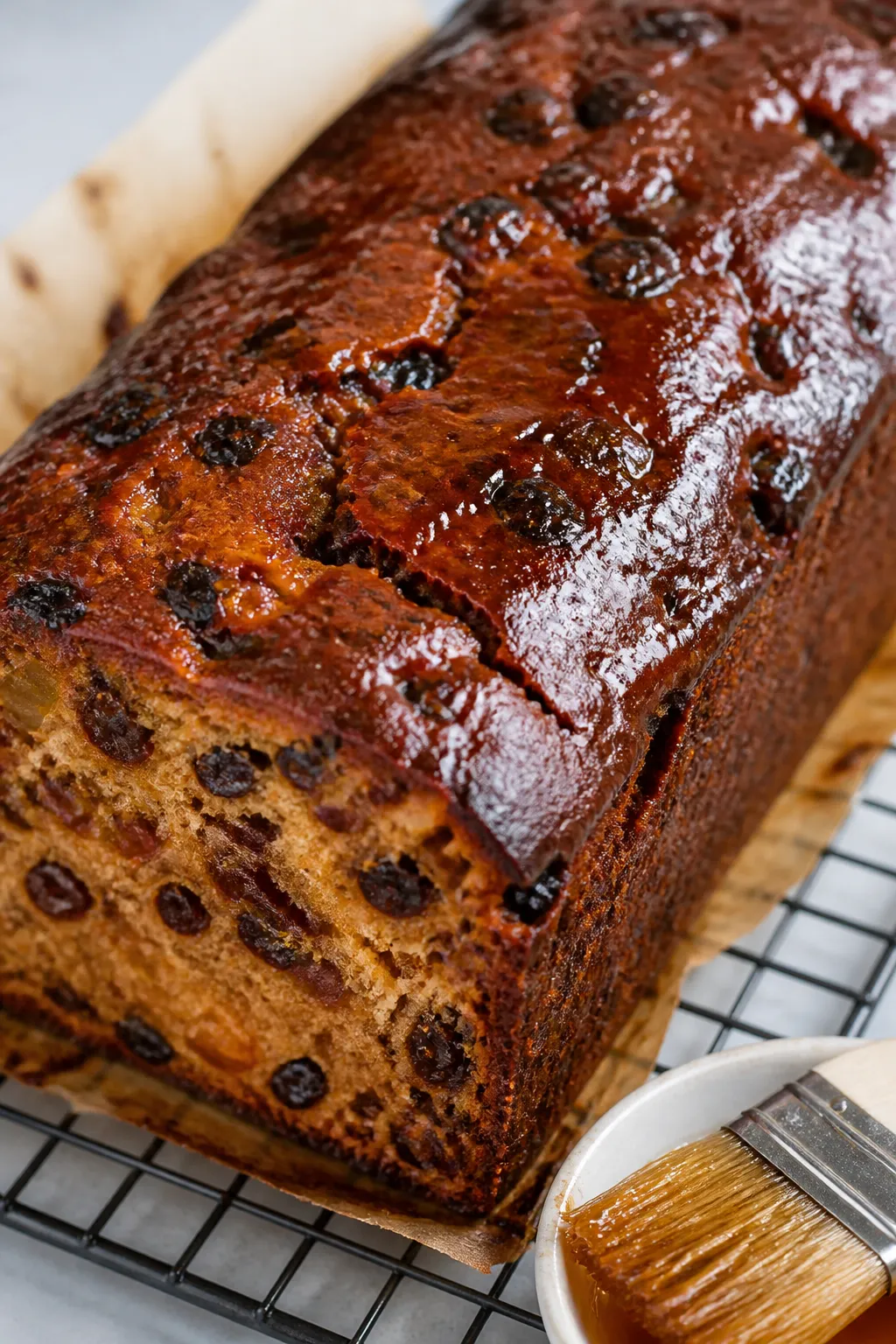
This fruitcake balances sweetness, spice, and moisture. Soaked dried fruit adds soft, jammy pockets of flavor, while brown sugar and molasses deepen the caramel notes. A sturdy batter enriched with eggs and butter supports the mix-ins without becoming heavy.
Low-and-slow baking prevents dryness and ensures the cake sets evenly. A gentle “feeding” with brandy (or fruit juice) over time keeps the crumb tender and makes the flavor bloom.
Shopping List
- Unsalted butter (room temperature)
- Dark brown sugar
- Molasses (optional but recommended)
- Large eggs
- All-purpose flour
- Baking powder
- Fine salt
- Ground spices: cinnamon, nutmeg, ginger, and cloves
- Orange zest and/or lemon zest
- Vanilla extract or almond extract
- Dried fruits: raisins, golden raisins (sultanas), currants, chopped dates, chopped dried apricots
- Glacé or candied peel (orange or mixed)
- Chopped nuts: walnuts, pecans, or almonds
- Brandy, rum, or orange juice (for soaking and feeding)
- Milk (if batter needs loosening)
- Brown parchment paper and butter for lining the pan
Instructions
- Soak the fruit: In a bowl, combine 3 cups mixed dried fruits (raisins, sultanas, currants, chopped dates/apricots) and 1/2 cup chopped candied peel. Add 1/2 cup brandy, rum, or orange juice.
Stir, cover, and let sit at least 2 hours, preferably overnight. This makes the fruit plump and prevents a dry cake.
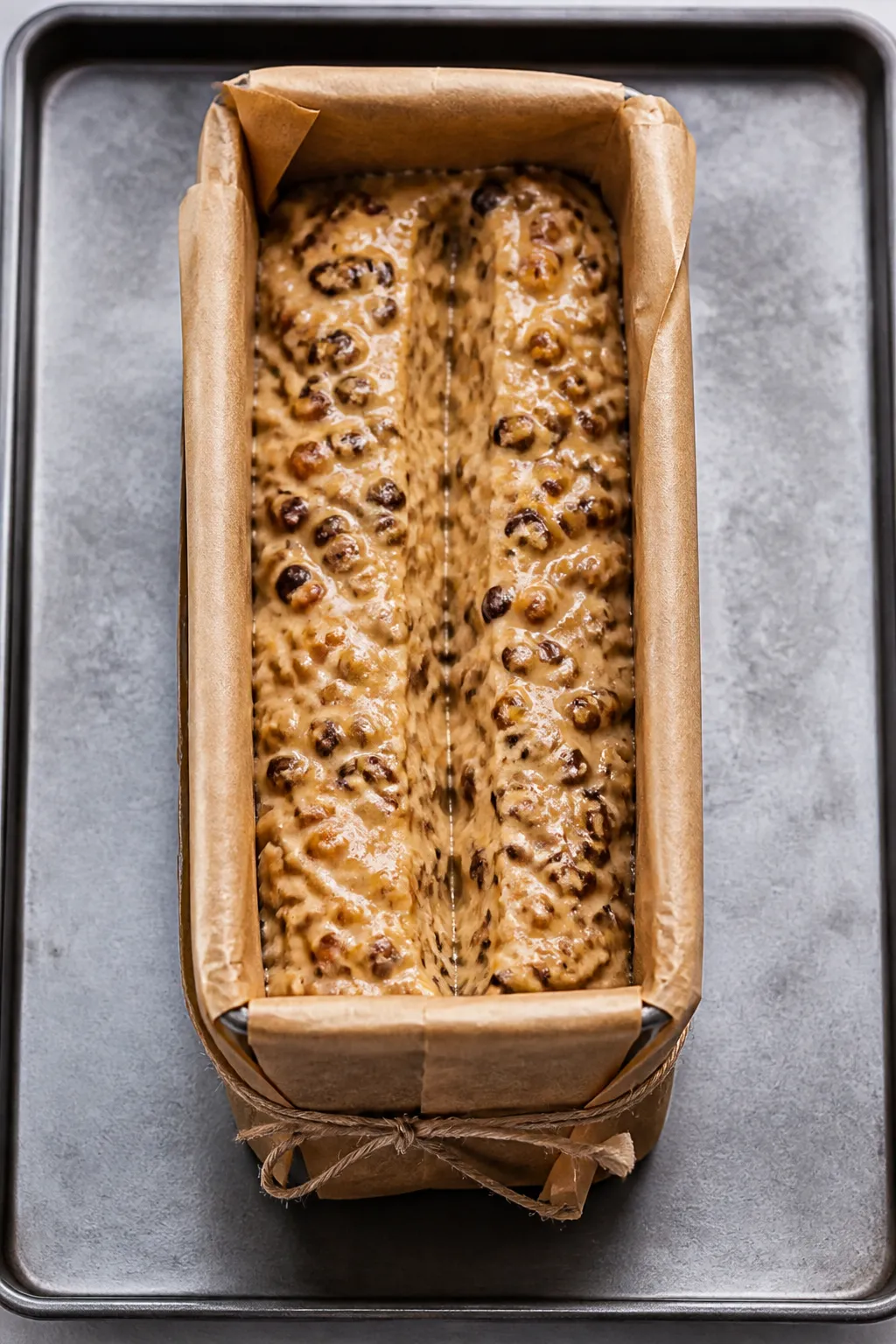
- Prep the pan and oven: Heat the oven to 300°F (150°C). Butter a 9×5-inch loaf pan (or an 8-inch round, deep tin) and line with parchment on the bottom and sides.
For extra protection, line the outside of the pan with a double layer of brown paper and tie it with string to guard the edges from over-browning.
- Mix the dry ingredients: In a bowl, whisk 2 cups all-purpose flour, 1 1/2 teaspoons baking powder, 1/2 teaspoon salt, 1 teaspoon cinnamon, 1/2 teaspoon nutmeg, 1/2 teaspoon ginger, and a pinch of cloves. Set aside.
- Cream butter and sugar: In a large bowl, beat 3/4 cup unsalted butter with 3/4 cup dark brown sugar until light and fluffy, 2–3 minutes. Beat in 2 tablespoons molasses for depth.
- Add eggs and flavorings: Beat in 3 large eggs, one at a time, scraping the bowl.
Mix in 1 teaspoon vanilla (or 1/2 teaspoon vanilla plus 1/4 teaspoon almond extract) and the zest of 1 orange.
- Combine batter and fruit: Stir the dry mixture into the butter mixture until just combined. If the batter seems stiff, add 1–2 tablespoons milk to loosen slightly. Toss 1 cup chopped nuts with 2 tablespoons flour (this helps prevent sinking), then fold the nuts and the soaked fruit (and any remaining liquid) gently into the batter.
- Fill the pan: Spoon the batter into the prepared pan and level the top.
Create a shallow trench down the center with the back of a spoon to encourage an even rise.
- Bake low and slow: Bake for 75–95 minutes, depending on the pan and oven. The cake is done when a skewer inserted in the center comes out with only a few moist crumbs and the top feels set. If the top darkens too quickly, tent with foil.
- Cool and feed: Let the cake cool in the pan for 20 minutes, then lift out to a wire rack.
While warm, poke small holes over the top with a skewer and brush with 1–2 tablespoons brandy (or orange juice). Cool completely.
- Wrap and mature: Wrap the cooled cake in parchment, then in foil. Store in an airtight tin at cool room temperature.
Feed with 1–2 tablespoons brandy once a week for 2–3 weeks before serving. This step is optional but highly recommended for a moist, aromatic loaf.
Storage Instructions
Wrapped well in parchment and foil, fruitcake keeps at cool room temperature for 3–4 weeks. For longer storage, refrigerate up to 2 months or freeze up to 6 months.
Always let it come to room temperature before slicing for the best texture. If freezing, double-wrap and label the date; thaw overnight in the fridge, then bring to room temp.
Health Benefits
- Fiber from dried fruits: Raisins, currants, and dates offer dietary fiber that supports digestion.
- Nuts for healthy fats: Walnuts and almonds supply unsaturated fats, plant protein, and micronutrients like magnesium.
- Spices with antioxidants: Cinnamon, ginger, and cloves contain beneficial plant compounds and add big flavor without excess sugar.
- Portion-friendly: Fruitcake is rich, so small slices are satisfying. A little goes a long way, helping with portion control during holiday feasts.
What Not to Do
- Don’t skip the soak: Dry fruit will pull moisture from the batter and make the cake crumbly.
- Don’t rush the bake: High heat dries out fruitcake.
Low and slow gives a tender crumb.
- Don’t overmix: Once the flour goes in, stir gently to avoid a tough texture.
- Don’t overload with leavening: Too much baking powder causes tunneling and collapse. Stick to the measured amount.
- Don’t slice too soon: Let the cake mature if you can. Even a few days improves moisture and flavor.
Alternatives
- Alcohol-free version: Use orange or apple juice to soak the fruit and for feeding.
Add a splash of vanilla for aroma.
- Gluten-free: Swap in a cup-for-cup gluten-free flour blend and add 1/2 teaspoon xanthan gum if your blend lacks it. Bake time may vary slightly.
- No nuts: Omit nuts and add extra dried fruit or chopped dried cherries for texture.
- Different spirits: Try dark rum, sherry, or brandy-orange liqueur for unique notes. Bourbon works too.
- Lighter spice profile: Use just cinnamon and a pinch of ginger for a gentler flavor.
- Berry-forward: Include dried cranberries and blueberries with orange zest for a brighter, tangy twist.
FAQ
Do I have to soak the fruit overnight?
Overnight soaking gives the best texture, but even 2 hours helps.
If you’re short on time, warm the liquid first and soak for 45–60 minutes, stirring a couple of times.
Can I make this cake ahead?
Yes. Fruitcake improves with time. Bake 2–3 weeks before serving, feed weekly, and store wrapped.
Even a 3–5 day rest makes a difference.
How do I prevent the fruit from sinking?
Toss nuts (and fruit if very wet) with a little flour before folding into the batter. A thicker batter also helps suspend the mix-ins.
My cake looks dark. Is it burnt?
Fruitcake tends to brown due to molasses and brown sugar.
As long as it doesn’t smell scorched and a skewer tests clean with moist crumbs, it’s fine. Tent with foil if the top darkens too quickly.
What if I don’t use alcohol?
Use orange juice or apple juice for both soaking and feeding. Store the cake well-wrapped and enjoy within 1–2 weeks for peak moisture.
Can I bake in smaller pans?
Yes.
Mini loaves or muffin-sized cakes make great gifts. Reduce baking time to 25–45 minutes depending on size and start checking early.
How thick should I slice fruitcake?
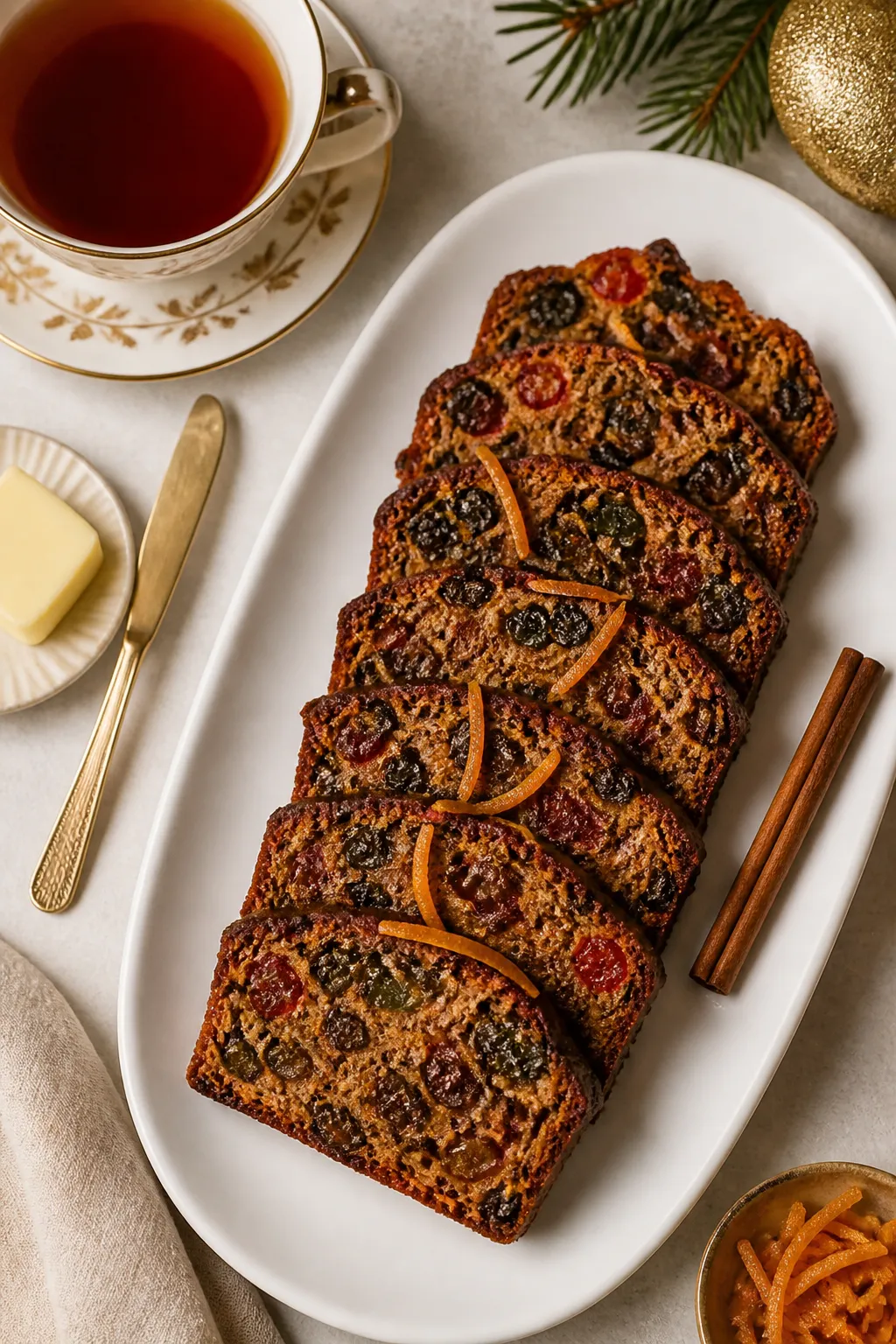
Cut thin slices, about 1/2 inch or less. It’s rich, and thin slices hold together better and showcase the fruit.
Why is my cake dry?
Common causes are skipping the fruit soak, overbaking, or storing unwrapped.
Brush the cooled cake with extra liquid and wrap it tightly to help it recover.
Can I add chocolate?
You can, but keep it modest—about 1/2 cup chopped dark chocolate. Too much can overwhelm the spices and fruit.
Is candied peel necessary?
No, but it adds classic citrus bitterness. If you skip it, increase the orange zest and use some dried apricots or cranberries for brightness.
Final Thoughts
Traditional Christmas fruitcake is all about balance: tender crumb, juicy fruit, warm spice, and a slow build of flavor.
With a little planning and gentle handling, you’ll get a loaf that feels special and festive. Make it once, and you may find it becomes part of your holiday rhythm—bake, wrap, feed, and share. Thin slices, good company, and a hot drink are all you need.
Printable Recipe Card
Want just the essential recipe details without scrolling through the article? Get our printable recipe card with just the ingredients and instructions.
About the Author

Brandon D
Blogger/Fitness & Wellness Coach
I create quick, healthy, family-friendly recipes that make dinner simple, delicious, and stress-free.