Easy Korean Beef Meal Prep Bowls – Fast, Flavorful, and Budget-Friendly
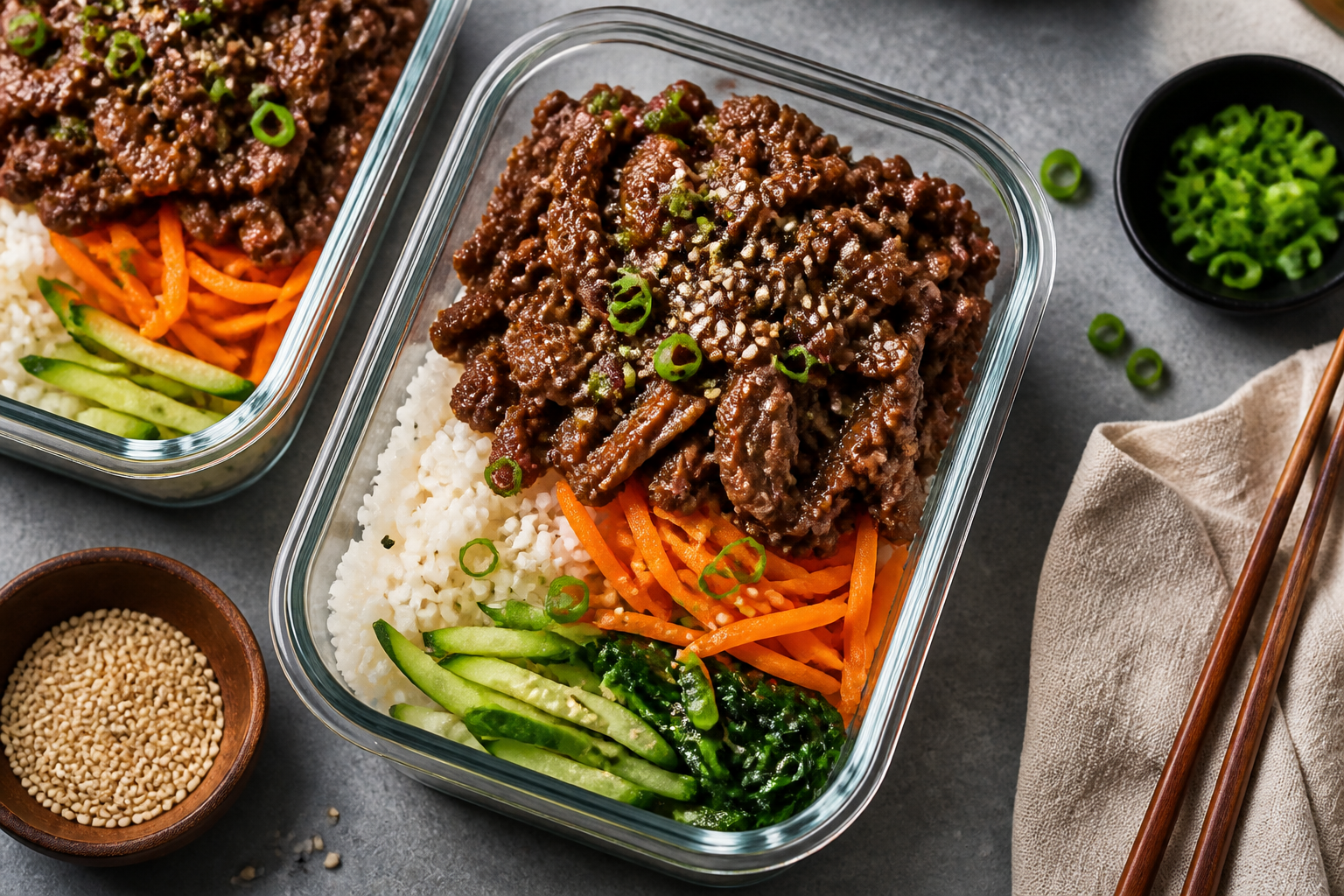
This is the kind of meal prep that makes weekday lunches something to look forward to. Sweet, savory, garlicky beef layered over fluffy rice with crisp veggies and a quick chili-lime drizzle—simple to cook and easy to pack. You get big flavor with basic pantry ingredients, and it all comes together in under 30 minutes.
FREE 7-Day Easy Dinner Reset
Save time, eat healthier, and take the stress out of dinner. Get a full week of easy healthy dinners delivered straight to your inbox.
The bowls keep well, reheat beautifully, and taste just as good on Friday as they did on Monday. If you’re new to meal prep, this is a foolproof place to start.
Ingredients
Method
- Cook the rice: Prepare 1.5 cups dry rice to yield about 3 cups cooked. Fluff and let it steam off so it doesn’t turn gummy in the containers.
- Prep the veggies: Thinly slice cucumbers and cabbage, and shred carrots. Toss cucumbers with a squeeze of lime, a pinch of sugar, and salt for a fast, bright crunch.
- Make the sauce: In a bowl, whisk soy sauce, brown sugar, rice vinegar, sesame oil, and gochujang or red pepper flakes if using. Set aside.
- Sauté aromatics: Heat oil in a large skillet over medium-high. Add garlic and ginger, stirring 30 seconds until fragrant. Don’t let them brown.
- Brown the beef: Add ground beef, breaking it up with a spatula. Cook 5–7 minutes until no pink remains and edges get a bit crispy. Drain excess fat if needed.
- Sauce it up: Pour the sauce into the skillet. Stir until the beef is evenly coated and glossy, about 2 minutes. Taste and adjust salt, sweetness, or heat.
- Finish with garnish: Stir in half the green onions. Sprinkle in sesame seeds and remove from heat.
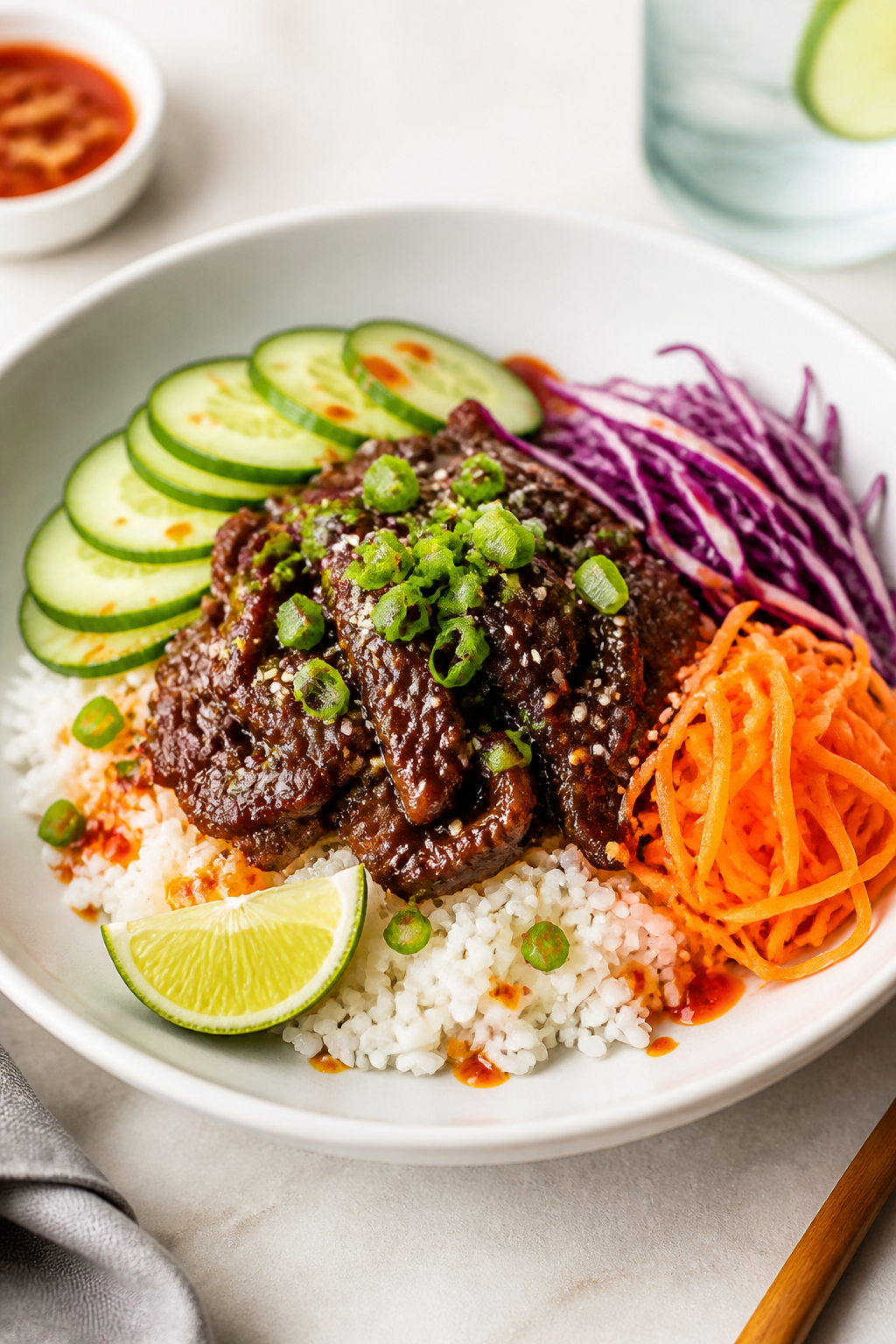
- Assemble bowls: Divide rice among 4–5 meal prep containers. Top with the Korean-style beef, then add carrots, cucumbers, and cabbage on the side to keep them crisp.
- Optional drizzle: Mix 1 tablespoon lime juice with 1 teaspoon soy sauce and a small dollop of gochujang. Drizzle over the veggies or pack on the side.
- Cool and store: Let containers cool uncovered for 15–20 minutes before sealing to prevent condensation.
What Makes This Special
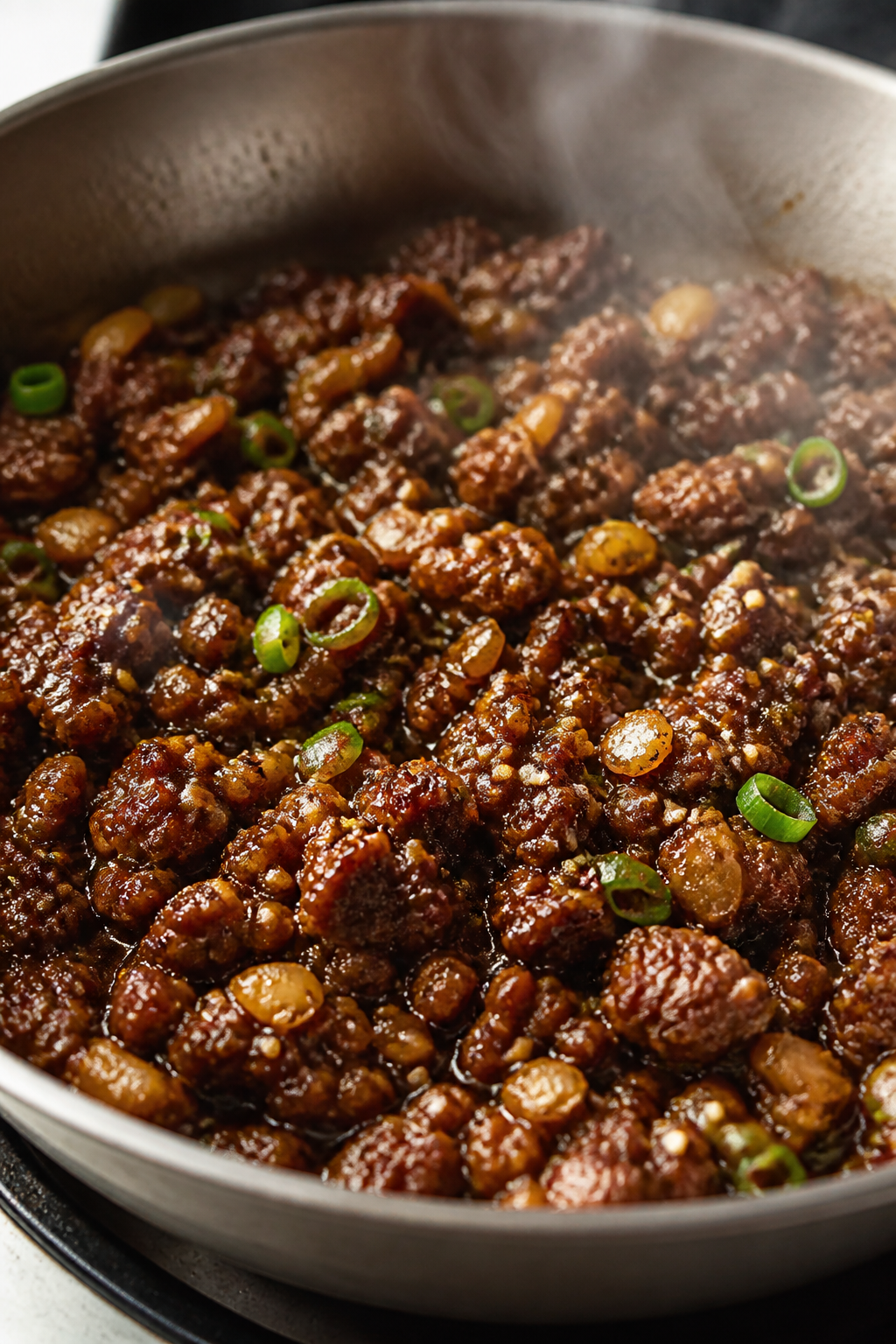
- Fast weeknight win: Ground beef cooks in minutes, and the sauce needs no special techniques.
- Balanced and satisfying: Protein-packed beef, tender rice, and fresh, crunchy vegetables hit all the marks.
- Pantry-friendly: Soy sauce, brown sugar, garlic, and ginger do the heavy lifting.
- Customizable heat: Add gochujang or red pepper flakes to dial in the spice level.
- Meal-prep ready: Holds up for days without getting soggy or bland.
Shopping List
- Beef: 1.5 pounds lean ground beef (90% lean or higher)
- Rice: 3 cups cooked rice (jasmine, basmati, or brown rice)
- Aromatics: 4 cloves garlic, minced; 1 tablespoon fresh ginger, minced
- Sauce: 1/3 cup low-sodium soy sauce; 3 tablespoons brown sugar; 1 tablespoon rice vinegar; 1–2 teaspoons sesame oil
- Heat (optional): 1–2 tablespoons gochujang or 1/2–1 teaspoon crushed red pepper flakes
- Veggies: 2 cups shredded carrots; 2 cups thinly sliced cucumbers; 1 cup thinly sliced red cabbage or bell pepper
- Quick pickle boost (optional): 1 lime, 1 teaspoon sugar, pinch of salt
- Garnishes: 3 green onions, thinly sliced; 1 tablespoon sesame seeds; lime wedges
- Oil: 1 tablespoon neutral oil (avocado, canola, or light olive)
Step-by-Step Instructions
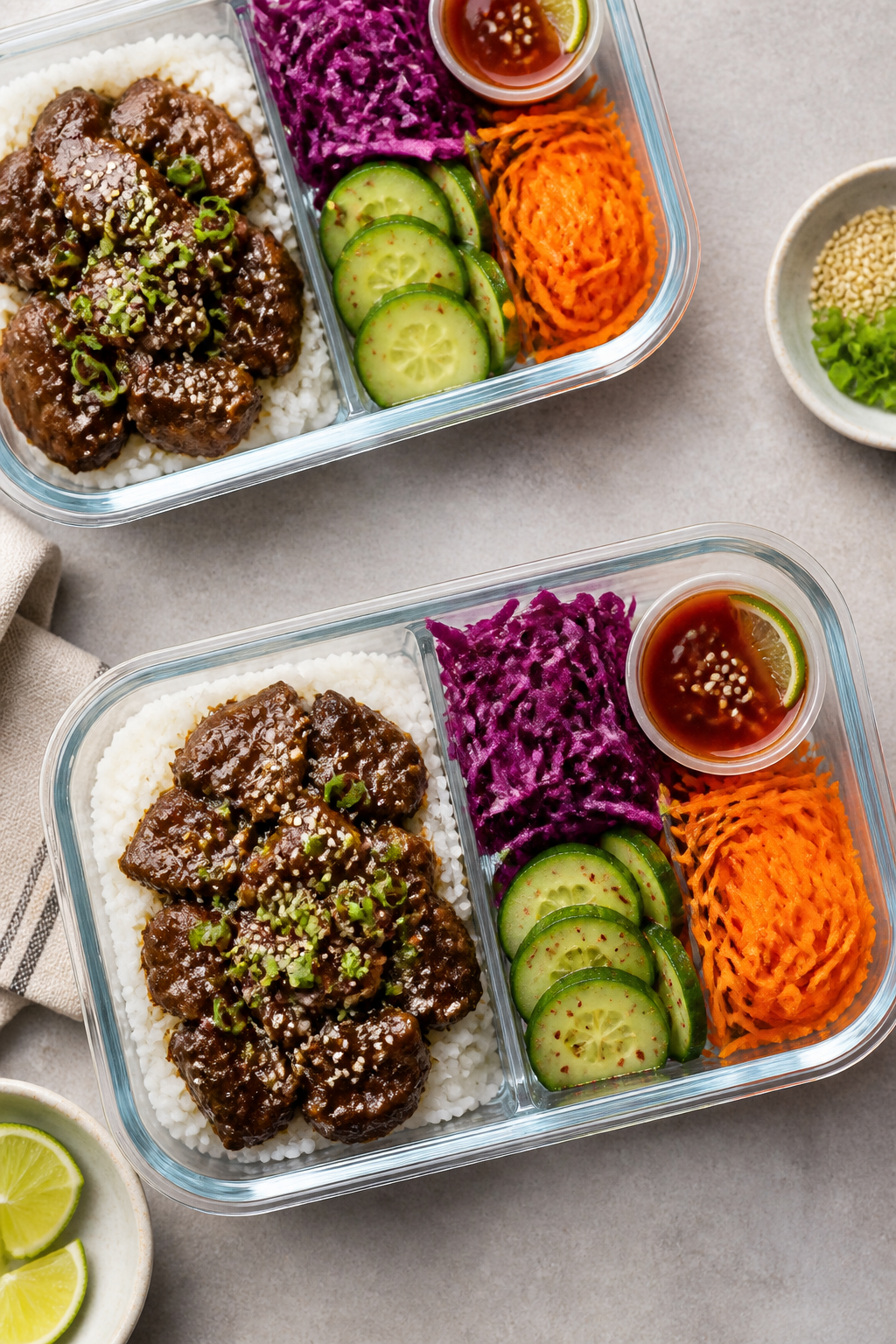
- Cook the rice: Prepare 1.5 cups dry rice to yield about 3 cups cooked. Fluff and let it steam off so it doesn’t turn gummy in the containers.
- Prep the veggies: Thinly slice cucumbers and cabbage, and shred carrots.
Toss cucumbers with a squeeze of lime, a pinch of sugar, and salt for a fast, bright crunch.
- Make the sauce: In a bowl, whisk soy sauce, brown sugar, rice vinegar, sesame oil, and gochujang or red pepper flakes if using. Set aside.
- Sauté aromatics: Heat oil in a large skillet over medium-high. Add garlic and ginger, stirring 30 seconds until fragrant.
Don’t let them brown.
- Brown the beef: Add ground beef, breaking it up with a spatula. Cook 5–7 minutes until no pink remains and edges get a bit crispy. Drain excess fat if needed.
- Sauce it up: Pour the sauce into the skillet.
Stir until the beef is evenly coated and glossy, about 2 minutes. Taste and adjust salt, sweetness, or heat.
- Finish with garnish: Stir in half the green onions. Sprinkle in sesame seeds and remove from heat.
- Assemble bowls: Divide rice among 4–5 meal prep containers.
Top with the Korean-style beef, then add carrots, cucumbers, and cabbage on the side to keep them crisp.
- Optional drizzle: Mix 1 tablespoon lime juice with 1 teaspoon soy sauce and a small dollop of gochujang. Drizzle over the veggies or pack on the side.
- Cool and store: Let containers cool uncovered for 15–20 minutes before sealing to prevent condensation.
Keeping It Fresh
- Storage: Refrigerate for up to 4 days. Keep any extra sauce or drizzle in a small cup inside the container.
- Reheating: Microwave the rice and beef for 60–90 seconds, stirring halfway.
Add the fresh veggies after reheating so they stay crisp.
- Freezing: You can freeze the beef and rice (not the raw veggies) for up to 2 months. Thaw overnight in the fridge and add fresh toppings when serving.
- Moisture control: If using cucumbers, pat them dry before packing to avoid watery bowls by midweek.
Health Benefits
- High-quality protein: Lean ground beef supports muscle repair and keeps you full longer.
- Smart carbs: Using brown rice adds fiber that supports digestion and steady energy. Jasmine or basmati keep it lighter but still satisfying.
- Micronutrient boost: Carrots, cabbage, and cucumbers bring vitamins A and C, potassium, and antioxidants.
- Controlled sodium and sugar: Low-sodium soy sauce and measured brown sugar let you manage the flavor without going overboard.
- Healthy fats: A touch of sesame oil delivers big flavor with minimal quantity.
Common Mistakes to Avoid
- Overcrowding the pan: Crowding steams the beef.
Use a large skillet and let it sear for better texture.
- Skipping the cool-down: Sealing hot containers traps steam and makes rice soggy. Cool briefly before storing.
- Too much sauce: Excess liquid can soak the rice. Simmer briefly so the sauce clings to the beef.
- Mixing veggies in: Keep raw veggies separate from hot components until eating to maintain crunch.
- Forgetting to taste: Adjust salt, sweetness, and heat at the end.
Every soy sauce and gochujang brand is different.
Alternatives
- Protein swaps: Ground turkey or chicken work well. For plant-based, try crumbled extra-firm tofu or tempeh; crisp it first, then add the sauce.
- Grain base: Quinoa, cauliflower rice, or mixed greens for a lighter bowl. If using greens, keep the beef warm but serve over cold greens right before eating.
- Sauce tweaks: Swap brown sugar for honey or maple.
Add a teaspoon of fish sauce for deeper umami if you like.
- Veggie variations: Try steamed broccoli, sautéed mushrooms, or edamame. Kimchi is great on the side for tang and probiotics.
- Gluten-free: Use tamari or coconut aminos in place of soy sauce and confirm your gochujang is gluten-free.
FAQ
Can I make this less sweet?
Yes. Reduce brown sugar to 1–2 tablespoons or swap with a splash of pineapple juice for lighter sweetness.
Need More Easy Dinner Ideas?
Get my FREE 7-Day Easy Dinner Reset and enjoy a full week of healthy dinners without the meal-planning stress.
Taste and adjust after the sauce cooks in.
Is gochujang necessary?
No. It adds classic depth and gentle heat, but crushed red pepper flakes or a small squeeze of sriracha work fine. Start small and build up.
How do I prevent the beef from drying out?
Use lean, not extra-lean, beef and avoid overcooking after adding the sauce.
A teaspoon more sesame oil or a splash of water can restore moisture if needed.
What containers work best for meal prep bowls?
Shallow, microwave-safe containers with separate compartments or a small insert cup help keep veggies crisp and sauces separate until you eat.
Can I double the recipe?
Absolutely. Brown the beef in batches so it sears instead of steams, then combine everything with the sauce at the end.
How spicy is this?
Mild to medium, depending on your gochujang or flakes. For very mild, skip the heat and add it only to individual portions later.
Can I add an egg?
Yes.
A jammy soft-boiled or fried egg on top is excellent. Store eggs separately and add after reheating to keep the yolk texture right.
Wrapping Up
Easy Korean Beef Meal Prep Bowls deliver big, week-after-week payoff with minimal effort. You get bold flavor, simple ingredients, and a setup that keeps well for days.
Tweak the spice, swap the veggies, and make it your own. Prep once, stack the fridge, and you’re set for stress-free, seriously tasty lunches.
Printable Recipe Card
Want just the essential recipe details without scrolling through the article? Get our printable recipe card with just the ingredients and instructions.
About the Author

Brandon D
Blogger/Fitness & Wellness Coach
I create quick, healthy, family-friendly recipes that make dinner simple, delicious, and stress-free.
Loved This Recipe?
If you're looking for more simple, healthy dinners your family will actually eat, grab my FREE 7-Day Easy Dinner Reset. You'll get 7 easy dinner recipes, simple grocery lists, and a done-for-you plan that takes the stress out of mealtime.