Crispy Honey Sriracha Salmon Bites – Sweet, Spicy, and Ready Fast
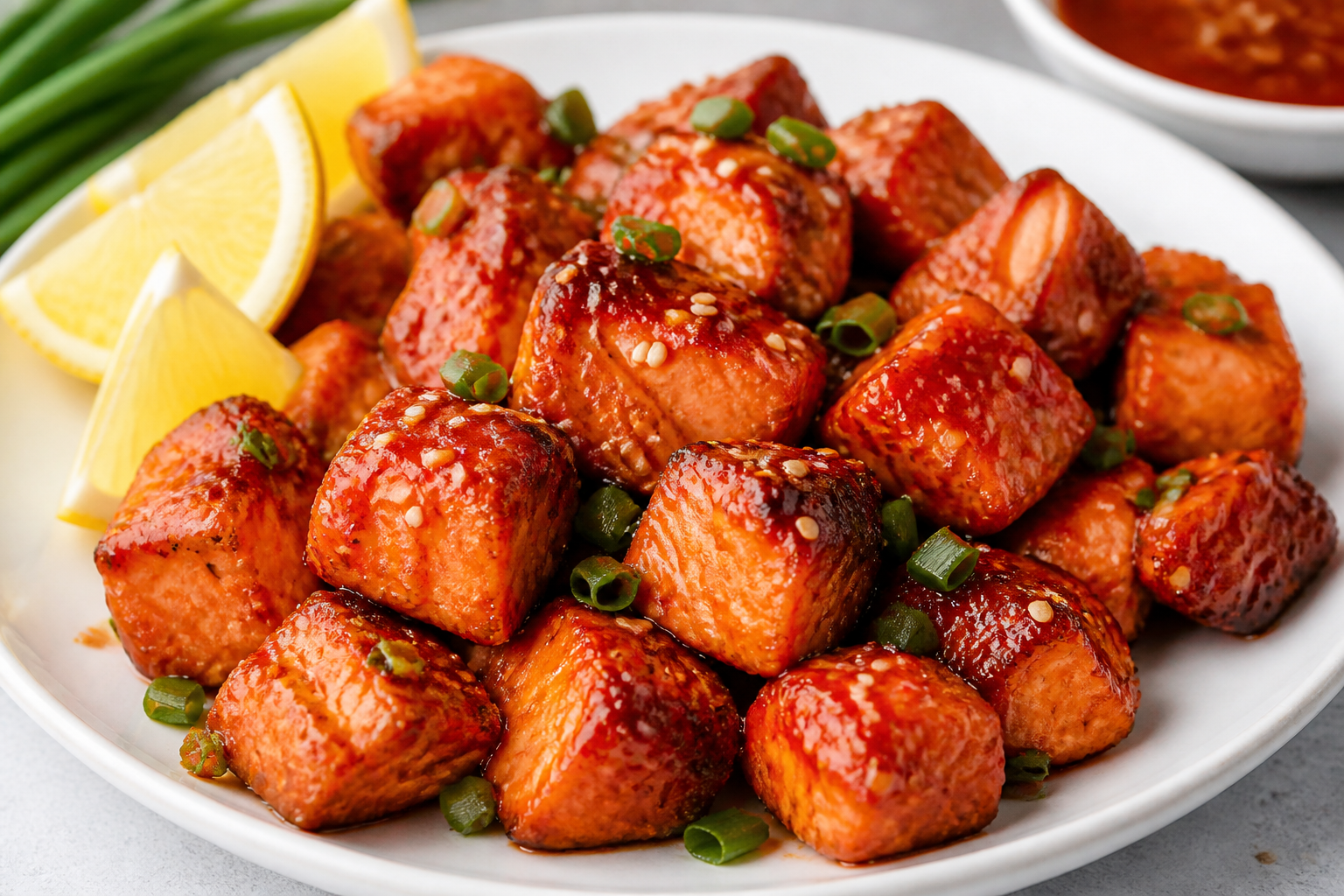
These little salmon bites are everything you want on a busy weeknight: bold flavor, quick cook time, and a satisfying crunch. They’re sweet, spicy, and a little sticky, with caramelized edges that make them seriously addictive. You can serve them over rice, toss them into a salad, or pile them into lettuce cups.
FREE 7-Day Easy Dinner Reset
Save time, eat healthier, and take the stress out of dinner. Get a full week of easy healthy dinners delivered straight to your inbox.
The best part is how easy they are to make—no deep fryer, no fuss, just simple ingredients and high heat.
Ingredients
Method
- Prep the salmon. Pat the salmon dry with paper towels and cut into even 1-inch cubes. Dry fish browns better and crisps up faster.
- Mix the glaze. In a bowl, whisk honey, sriracha, soy sauce, rice vinegar, garlic, ginger, and sesame oil (if using). Taste and adjust heat and sweetness. You want a bold, slightly thick sauce.
- Coat with cornstarch. In a separate bowl, toss salmon cubes with cornstarch until lightly coated. Shake off any excess. This is the key to that crispy exterior.
- Choose your cooking method. Stovetop: Heat 1–2 tablespoons oil in a large nonstick skillet over medium-high. When shimmering, add salmon in a single layer. Don’t crowd the pan. Cook 2–3 minutes per side until golden and just cooked through, about 5–7 minutes total.
- Air fryer: Lightly oil the basket. Arrange salmon in one layer at 400°F (200°C) for 7–9 minutes, shaking halfway.
- Oven: Place on a lined sheet, drizzle lightly with oil, and bake at 450°F (230°C) for 10–12 minutes, broiling the last 1–2 minutes for extra color.
- Glaze and caramelize. Reduce heat to medium-low (or transfer cooked salmon to a bowl if air-fried/oven-baked). Pour the sauce into the hot skillet and let it bubble for 30–60 seconds until slightly thick. Add salmon back in and toss gently to coat. Cook 1 minute more to let the sauce cling and edges caramelize.
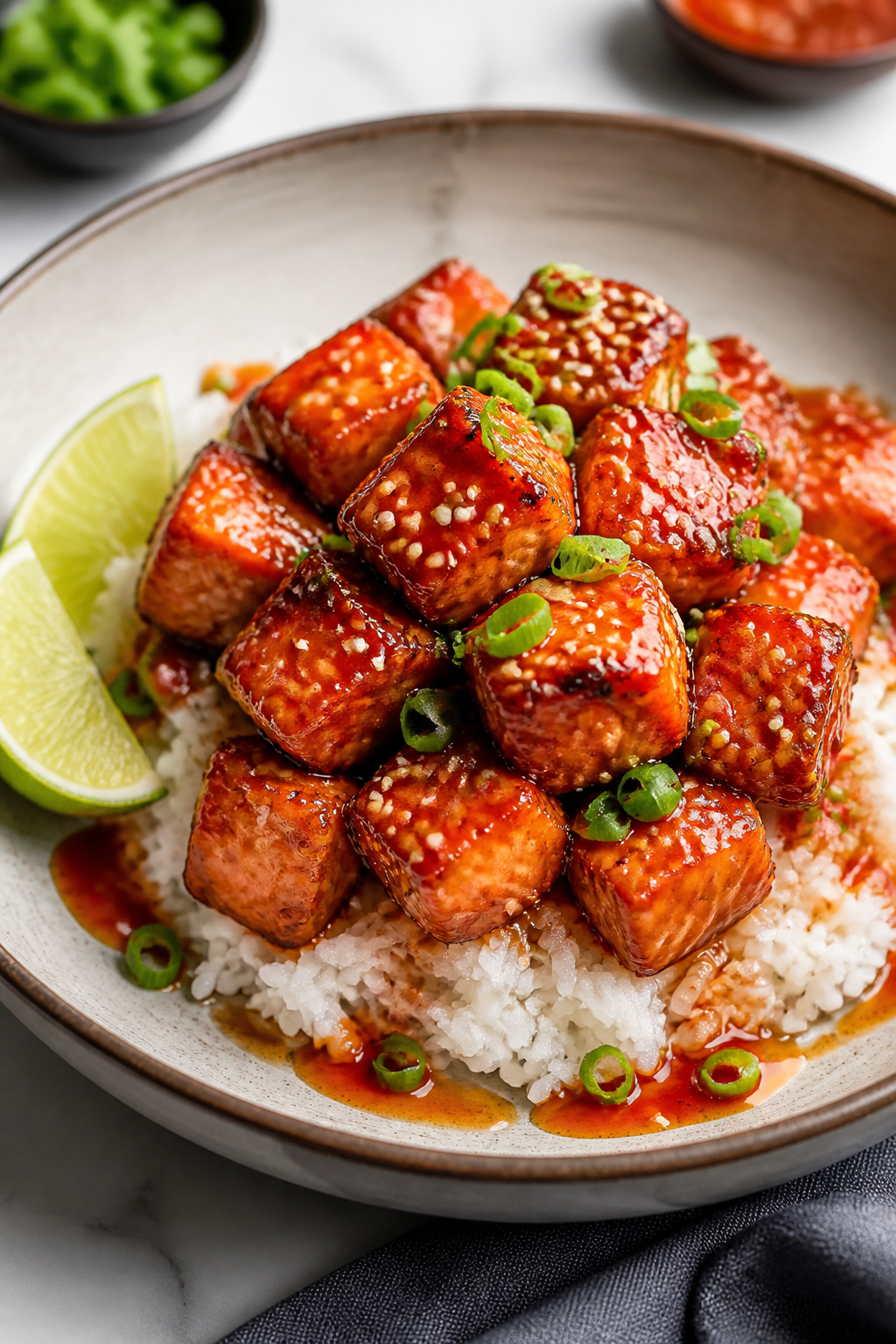
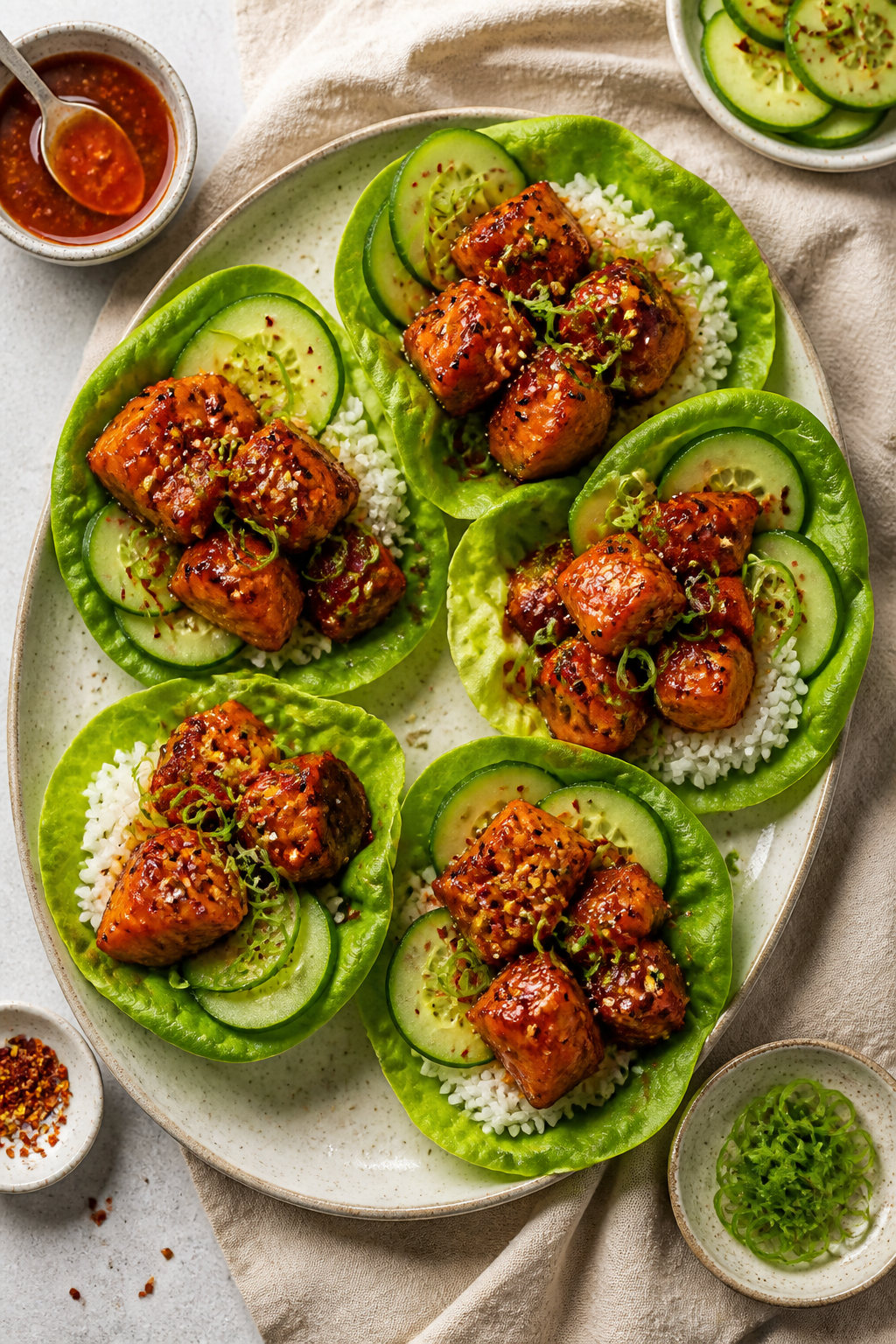
- Finish and serve. Sprinkle sesame seeds and green onions over the top. Add a squeeze of lime if you like. Serve immediately over rice, spoon onto cucumber slices, or tuck into lettuce cups.
What Makes This Special
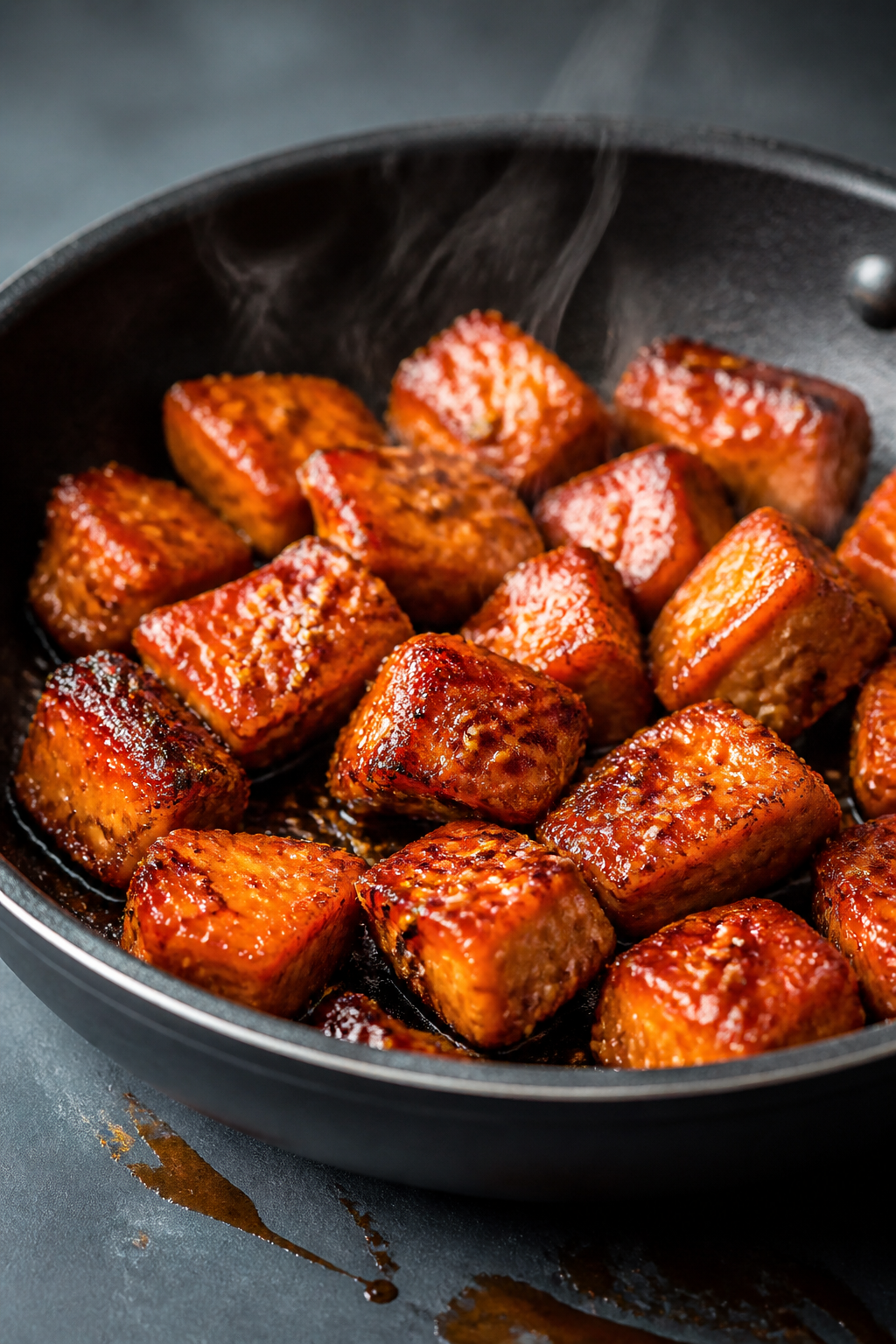
Honey and sriracha are a perfect match: one smooth and sweet, the other bright and tangy with heat. Paired with salmon, they create a glaze that clings to each bite and turns crisp in the pan or air fryer. A quick cornstarch dusting gives those golden edges that crunch without heavy breading.
With just a handful of pantry staples, you get restaurant-level flavor at home.
Plus, this recipe is flexible. You can make it milder or spicier, swap in gluten-free ingredients, or cook it in the oven, air fryer, or on the stovetop. It’s a reliable go-to that never feels boring.
Shopping List
- Salmon fillets (skinless, about 1.5 pounds), cut into 1-inch cubes
- Honey (3 tablespoons)
- Sriracha (2–3 tablespoons, adjust to taste)
- Soy sauce or tamari (2 tablespoons)
- Rice vinegar or lime juice (1 tablespoon)
- Garlic (2 cloves, minced) or 1/2 teaspoon garlic powder
- Ginger (1 teaspoon grated) or 1/4 teaspoon ground ginger
- Cornstarch (2 tablespoons)
- Avocado oil or neutral oil (2–3 tablespoons, for pan-frying)
- Sesame oil (1/2 teaspoon, optional for depth)
- Sesame seeds (optional, for garnish)
- Green onions (2, thinly sliced for garnish)
- Lime wedges (optional)
- Cooked rice, noodles, or lettuce cups (for serving)
Step-by-Step Instructions
- Prep the salmon. Pat the salmon dry with paper towels and cut into even 1-inch cubes.
Dry fish browns better and crisps up faster.
- Mix the glaze. In a bowl, whisk honey, sriracha, soy sauce, rice vinegar, garlic, ginger, and sesame oil (if using). Taste and adjust heat and sweetness. You want a bold, slightly thick sauce.
- Coat with cornstarch. In a separate bowl, toss salmon cubes with cornstarch until lightly coated.
Shake off any excess. This is the key to that crispy exterior.
- Choose your cooking method.
- Stovetop: Heat 1–2 tablespoons oil in a large nonstick skillet over medium-high. When shimmering, add salmon in a single layer.
Don’t crowd the pan. Cook 2–3 minutes per side until golden and just cooked through, about 5–7 minutes total.
- Air fryer: Lightly oil the basket. Arrange salmon in one layer at 400°F (200°C) for 7–9 minutes, shaking halfway.
- Oven: Place on a lined sheet, drizzle lightly with oil, and bake at 450°F (230°C) for 10–12 minutes, broiling the last 1–2 minutes for extra color.
- Stovetop: Heat 1–2 tablespoons oil in a large nonstick skillet over medium-high. When shimmering, add salmon in a single layer.
- Glaze and caramelize. Reduce heat to medium-low (or transfer cooked salmon to a bowl if air-fried/oven-baked).
Pour the sauce into the hot skillet and let it bubble for 30–60 seconds until slightly thick. Add salmon back in and toss gently to coat. Cook 1 minute more to let the sauce cling and edges caramelize.
- Finish and serve. Sprinkle sesame seeds and green onions over the top.
Add a squeeze of lime if you like. Serve immediately over rice, spoon onto cucumber slices, or tuck into lettuce cups.
Keeping It Fresh
Leftover salmon bites keep well for 2–3 days in an airtight container in the fridge. For best texture, reheat in a skillet over medium heat or in the air fryer for a few minutes to revive the crisp edges.
The microwave works in a pinch, but the coating will soften.
If you’re meal-prepping, store the glaze separately and toss with freshly warmed salmon just before eating. You can also cube and freeze raw salmon for up to 2 months; thaw in the fridge overnight before cooking.
Benefits of This Recipe
- Fast and flexible: On the table in about 20–25 minutes, with options for stovetop, oven, or air fryer.
- Balanced flavor: Sweet heat with tangy notes that pair well with rice, noodles, or veggies.
- Great texture: Light cornstarch coating gives a crispy finish without deep frying.
- Nutrient-dense: Salmon brings omega-3s and protein, and you control the sugar and sodium.
- Entertaining-friendly: Easy to scale and serve as finger food or a main dish.
Pitfalls to Watch Out For
- Overcrowding the pan: Leads to steaming instead of crisping. Cook in batches if needed.
- Too much cornstarch: A heavy coat turns gummy.
Aim for a thin, even dusting.
- Overcooking the salmon: It should be just opaque and flaky. Pull it once it reaches about 125–130°F (52–54°C) for medium.
- Glaze burning: Honey burns quickly. Reduce heat before adding the sauce and keep it moving.
- Skipping the pat-dry step: Moisture prevents browning and makes the coating slip.
Variations You Can Try
- Extra crispy: Swap half the cornstarch for rice flour or potato starch for a lighter crunch.
- Garlic-lime twist: Add zest of 1 lime and an extra clove of garlic to the glaze; finish with lime juice.
- Peanut or tahini finish: Whisk 1 tablespoon peanut butter or tahini into the sauce for a creamy glaze.
- Sesame-forward: Add 1 teaspoon toasted sesame oil and sprinkle with furikake.
- Lower heat: Reduce sriracha and add ketchup for a milder, kid-friendly version.
- Gluten-free: Use tamari or coconut aminos and check labels on sriracha and vinegar.
- No honey: Try maple syrup or agave.
Maple adds a subtle smoky note that’s great with salmon.
FAQ
Can I use frozen salmon?
Yes. Thaw completely in the fridge overnight, then pat dry very well before coating with cornstarch. Extra moisture will keep the bites from crisping.
What’s the best pan for stovetop cooking?
Need More Easy Dinner Ideas?
Get my FREE 7-Day Easy Dinner Reset and enjoy a full week of healthy dinners without the meal-planning stress.
A large nonstick or well-seasoned cast iron skillet works best.
You want high heat and enough surface area so the pieces sear, not steam.
How spicy are these salmon bites?
They’re medium by default. For less heat, start with 1 tablespoon sriracha and add more to taste. For more kick, add red pepper flakes or a touch of gochujang.
Can I make the sauce ahead of time?
Absolutely.
Mix the glaze up to 3 days ahead and store it in the fridge. Give it a quick stir before using, as honey can thicken when chilled.
What should I serve with it?
Steamed jasmine rice, coconut rice, or garlic fried rice are all great. For something lighter, try shredded cabbage, cucumber ribbons, or butter lettuce cups with pickled carrots.
How do I keep the bites from sticking?
Use enough oil, preheat the pan until it shimmers, and avoid moving the salmon too soon.
Once the crust forms, the pieces release easily.
Can I scale this for a crowd?
Yes. Double the recipe and cook in batches, then toss everything with warmed glaze in a large skillet before serving. Keep the first batch on a sheet tray in a low oven to stay warm.
Is there a lower-sugar option?
Use half the honey and add a splash of orange juice for body.
The glaze will be less sticky but still flavorful.
What if I don’t have cornstarch?
Potato starch, rice flour, or even a light dusting of all-purpose flour will work. Starch-based options give the best crisp.
Can I use another fish?
Yes. Firm, flaky fish like cod, halibut, or steelhead trout hold up well.
Adjust cook time slightly, as thinner pieces cook faster.
Wrapping Up
Crispy Honey Sriracha Salmon Bites give you that sweet-heat payoff with minimal effort. A quick cornstarch coat, a bold glaze, and a few minutes of high heat are all it takes. Keep this one in your weeknight rotation, and don’t be surprised when it becomes your new “I’ve got this” dinner.
Simple, fast, and wildly satisfying—exactly what a great recipe should be.
Printable Recipe Card
Want just the essential recipe details without scrolling through the article? Get our printable recipe card with just the ingredients and instructions.
About the Author

Brandon D
Blogger/Fitness & Wellness Coach
I create quick, healthy, family-friendly recipes that make dinner simple, delicious, and stress-free.
Loved This Recipe?
If you're looking for more simple, healthy dinners your family will actually eat, grab my FREE 7-Day Easy Dinner Reset. You'll get 7 easy dinner recipes, simple grocery lists, and a done-for-you plan that takes the stress out of mealtime.