Garlic Herb Butter Salmon & Asparagus – Simple, Flavorful, Weeknight-Friendly
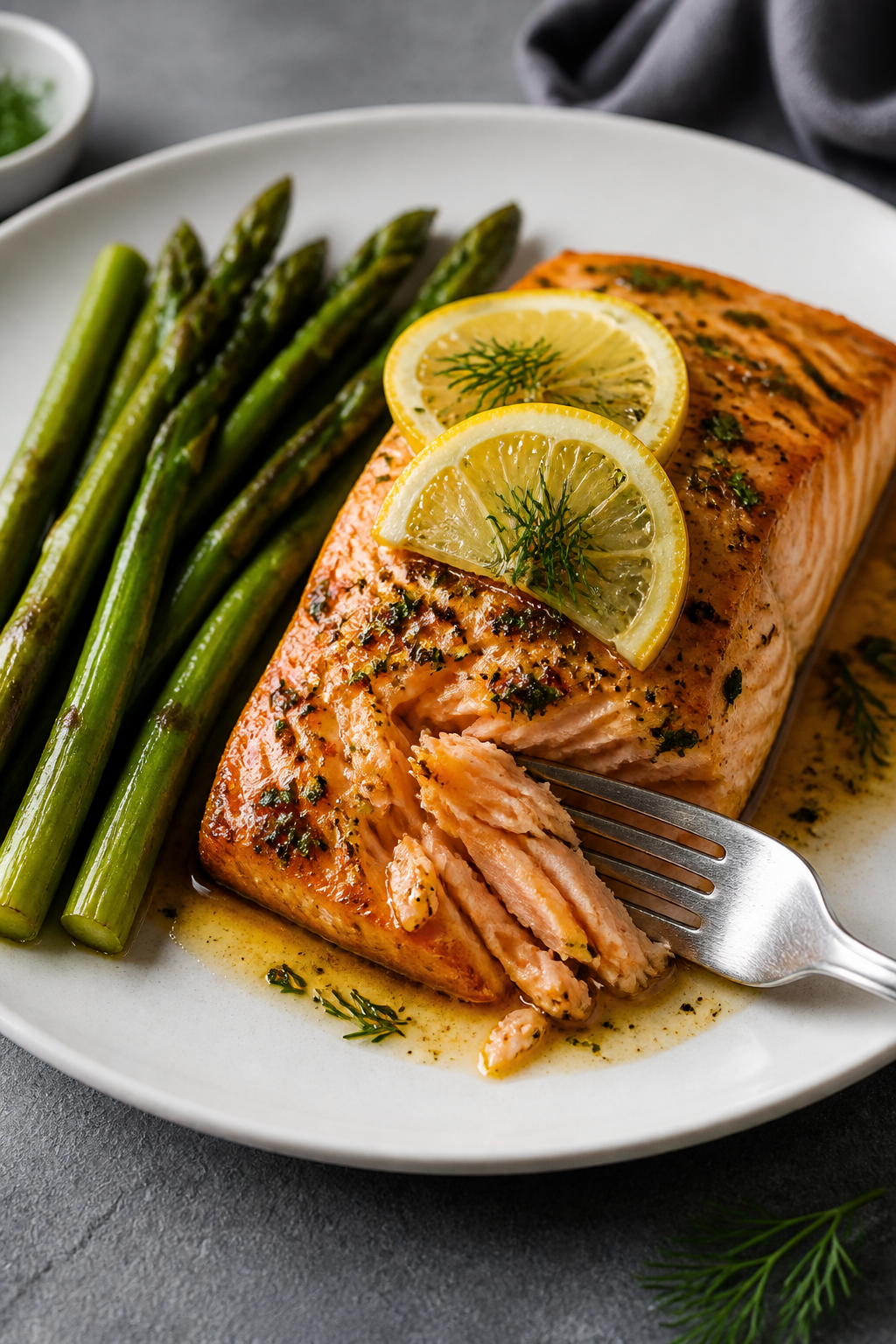
This is the kind of meal that makes a weeknight feel special without a pile of dishes. Tender salmon, crisp-tender asparagus, and a rich garlic herb butter come together in under 30 minutes. Everything cooks on one pan, and the butter melts into the salmon, basting it in flavor.
FREE 7-Day Easy Dinner Reset
Save time, eat healthier, and take the stress out of dinner. Get a full week of easy healthy dinners delivered straight to your inbox.
It’s bright, garlicky, and satisfying without being heavy. If you’re new to cooking fish at home, this recipe is a sure win.
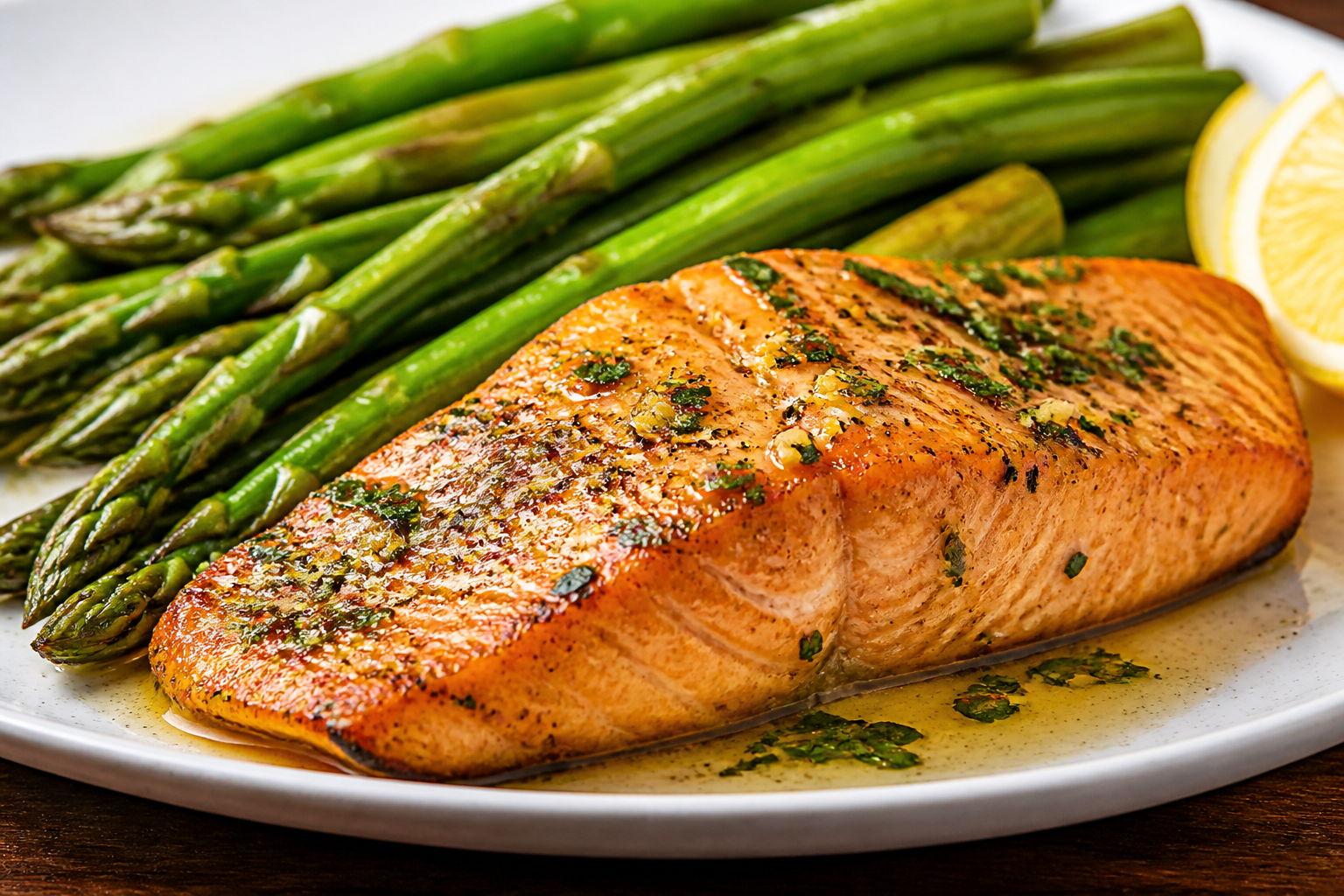
Garlic Herb Butter Salmon & Asparagus - Simple, Flavorful, Weeknight-Friendly
Ingredients
Method
- Preheat and prep: Heat your oven to 400°F (200°C). Line a sheet pan with parchment paper or lightly oil it for easy cleanup.
- Make the herb butter: In a small bowl, combine softened butter, minced garlic, parsley, dill, thyme, lemon zest, a pinch of salt, and black pepper. If you like heat, add red pepper flakes. Mash together until evenly blended.
- Season the asparagus: Spread the asparagus on the sheet pan. Drizzle with olive oil, sprinkle with salt and pepper, and toss to coat. Arrange in a single layer, leaving space for the salmon.
- Season the salmon: Pat the salmon dry with paper towels. Place the fillets on the sheet pan, skin side down if using skin-on. Sprinkle both the fish and asparagus with a little more salt and pepper.
- Top with butter: Divide the garlic herb butter among the salmon fillets, smearing a generous layer over the tops. Dot a little on the asparagus if you like extra richness.
- Roast: Bake for 10–12 minutes, depending on thickness. Asparagus should be crisp-tender and salmon should flake easily with a fork. For thicker fillets, add 2–3 minutes.
- Optional broil finish: For a lightly caramelized top, switch to broil for 1–2 minutes at the end. Watch closely to avoid burning.
- Finish with lemon: Squeeze fresh lemon juice over the salmon and asparagus right before serving. Serve with extra wedges on the side.
- Plate and enjoy: Transfer to plates and spoon any melted butter from the pan over the fish. Garnish with extra herbs if you have them.
What Makes This Recipe So Good
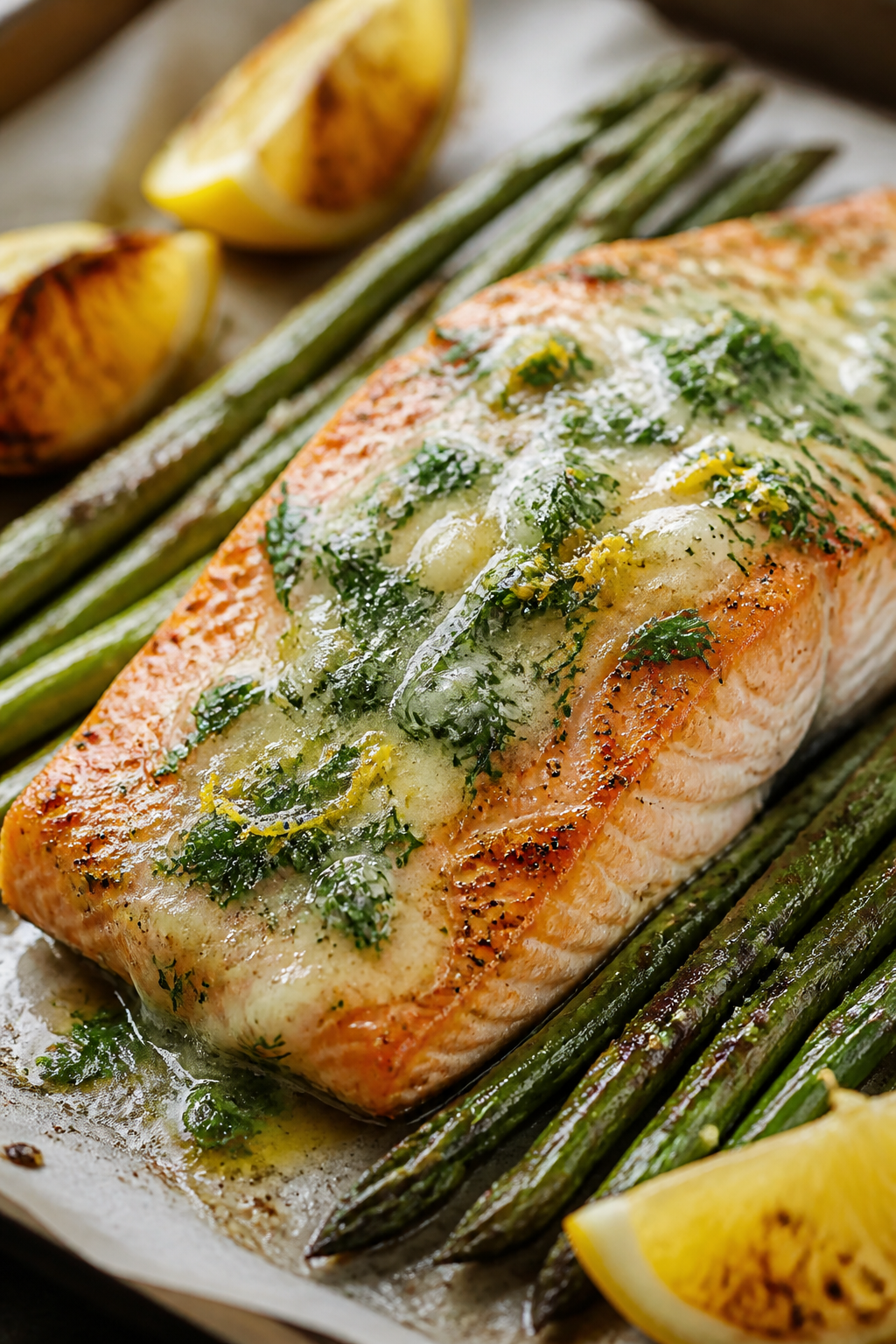
- Balanced flavors: The buttery richness pairs perfectly with lemon and fresh herbs, keeping things light and bright.
- One-pan convenience: Salmon and asparagus roast together, so cleanup is quick.
- Quick cook time: From start to finish, you’re done in about 25 minutes.
- Foolproof texture: The herb butter helps lock in moisture so the salmon stays tender.
- Flexible: Use fillets or a whole side of salmon. Swap herbs based on what you have.
Ingredients
- 4 salmon fillets (about 5–6 ounces each), skin-on or skinless
- 1 bunch asparagus, woody ends trimmed
- 4 tablespoons unsalted butter, softened
- 3 cloves garlic, finely minced
- 2 tablespoons fresh parsley, finely chopped
- 1 tablespoon fresh dill, finely chopped (or 1 teaspoon dried dill)
- 1 teaspoon fresh thyme leaves (or 1/2 teaspoon dried thyme)
- 1 lemon, zested and cut into wedges
- 2 tablespoons extra-virgin olive oil
- Salt and freshly ground black pepper
- Optional: 1/4 teaspoon red pepper flakes for gentle heat
Step-by-Step Instructions
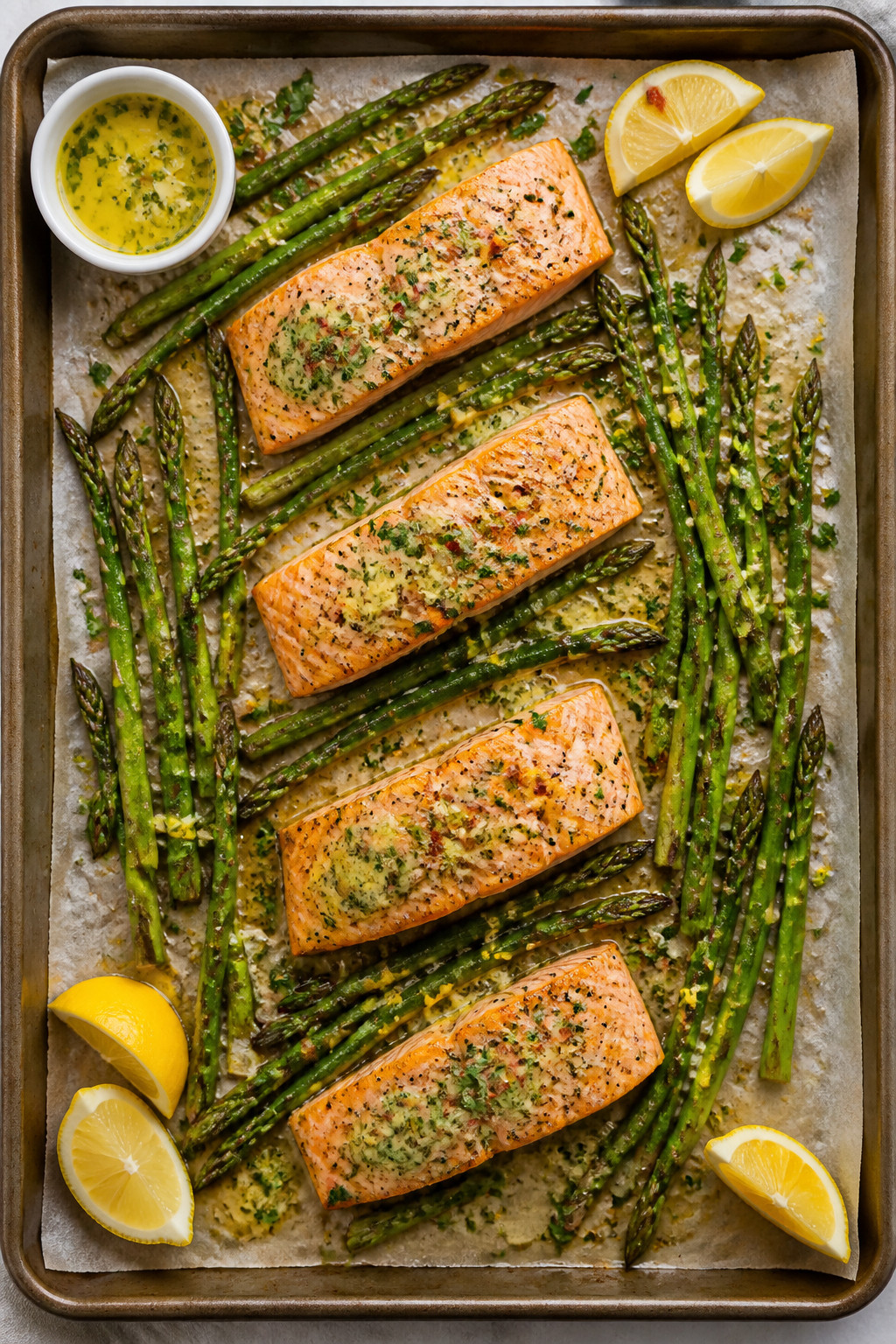
- Preheat and prep: Heat your oven to 400°F (200°C).
Line a sheet pan with parchment paper or lightly oil it for easy cleanup.
- Make the herb butter: In a small bowl, combine softened butter, minced garlic, parsley, dill, thyme, lemon zest, a pinch of salt, and black pepper. If you like heat, add red pepper flakes. Mash together until evenly blended.
- Season the asparagus: Spread the asparagus on the sheet pan.
Drizzle with olive oil, sprinkle with salt and pepper, and toss to coat. Arrange in a single layer, leaving space for the salmon.
- Season the salmon: Pat the salmon dry with paper towels. Place the fillets on the sheet pan, skin side down if using skin-on.
Sprinkle both the fish and asparagus with a little more salt and pepper.
- Top with butter: Divide the garlic herb butter among the salmon fillets, smearing a generous layer over the tops. Dot a little on the asparagus if you like extra richness.
- Roast: Bake for 10–12 minutes, depending on thickness. Asparagus should be crisp-tender and salmon should flake easily with a fork.
For thicker fillets, add 2–3 minutes.
- Optional broil finish: For a lightly caramelized top, switch to broil for 1–2 minutes at the end. Watch closely to avoid burning.
- Finish with lemon: Squeeze fresh lemon juice over the salmon and asparagus right before serving. Serve with extra wedges on the side.
- Plate and enjoy: Transfer to plates and spoon any melted butter from the pan over the fish.
Garnish with extra herbs if you have them.
Storage Instructions
- Refrigerator: Store leftovers in an airtight container for up to 2 days. Keep the salmon and asparagus together or separate—either works.
- Reheating: Reheat gently at 275°F (135°C) for 10–12 minutes, or microwave in short bursts at 50% power. Avoid high heat to prevent drying out.
- Freezing: Cooked salmon can be frozen up to 2 months, well wrapped.
Asparagus doesn’t freeze well after roasting—it gets mushy.
- Meal prep tip: Enjoy leftovers chilled over a salad with a squeeze of lemon and a drizzle of olive oil.
Health Benefits
- Omega-3s for heart health: Salmon is rich in EPA and DHA, which support heart, brain, and joint health.
- High-quality protein: Each serving packs lean protein that supports muscle recovery and keeps you full.
- Vitamins and minerals: Asparagus provides folate, vitamin K, and fiber, while salmon offers vitamin D, B12, and selenium.
- Balanced fats: A small amount of butter adds flavor and helps your body absorb fat-soluble vitamins from the meal.
- Low-carb and gluten-free: Naturally fits many eating styles without feeling restrictive.
Common Mistakes to Avoid
- Overcooking the salmon: This is the biggest culprit of dry fish. Aim for an internal temperature of 125–130°F (52–54°C) for moist, tender results.
- Skipping the pat dry step: Moisture on the fish prevents browning and dilutes seasonings. Drying the fillets makes a big difference.
- Crowding the pan: Overlapping asparagus or salmon steams instead of roasts.
Use a large pan or two smaller ones.
- Not seasoning enough: Salmon and asparagus need a solid pinch of salt and pepper to bring out their flavors.
- Adding lemon too early: Acid can dull the herbs in the butter during baking. Add lemon at the end for a bright finish.
Alternatives
- Different herbs: Swap parsley and dill for chives, basil, or tarragon. Dried Italian seasoning works in a pinch.
- Dairy-free: Use a high-quality vegan butter or olive oil.
Add a teaspoon of Dijon for extra depth.
- Citrus twist: Try orange or lime zest instead of lemon. Blood orange is great for a sweeter note.
- Vegetable swap: Use broccolini, green beans, or thin carrot sticks. Adjust roasting time as needed.
- Cooking method: Pan-sear salmon skin-side down for 4–5 minutes, flip for 1–2, then finish in the oven with the butter.
Or grill with a foil tray for easy cleanup.
- Whole side of salmon: Roast a 1.5–2 lb side at 400°F (200°C) for 14–18 minutes, depending on thickness. Spread the herb butter evenly over the top.
FAQ
How do I know when salmon is done?
The flesh should turn opaque and flake easily with a fork. If you have a thermometer, aim for 125–130°F (52–54°C) at the thickest part for moist, medium salmon.
Should I remove the salmon skin?
Need More Easy Dinner Ideas?
Get my FREE 7-Day Easy Dinner Reset and enjoy a full week of healthy dinners without the meal-planning stress.
You can keep it on for easier handling and extra moisture.
After cooking, the flesh lifts off the skin easily if you prefer not to eat it.
Can I use frozen salmon?
Yes. Thaw it in the fridge overnight or in a sealed bag under cold water. Pat dry very well before seasoning and baking.
What if my asparagus is thick?
Thick spears may need 2–3 extra minutes.
You can start them in the oven for a few minutes before adding the salmon, or peel the bottom third with a veggie peeler.
Is there a substitute for butter?
Olive oil works well. For more flavor, whisk olive oil with minced garlic, herbs, lemon zest, and a pinch of Dijon before brushing on.
How can I make this spicier?
Add red pepper flakes to the herb butter, or finish with a drizzle of chili crisp or a pinch of Aleppo pepper.
What sides go well with this?
Serve with roasted potatoes, rice pilaf, quinoa, or a simple green salad. A crusty baguette is great for soaking up the buttery pan juices.
Can I make the herb butter ahead?
Yes.
Mix it up to 3 days in advance and refrigerate. Let it soften slightly before spreading on the salmon.
In Conclusion
Garlic Herb Butter Salmon & Asparagus is a dependable, weeknight-friendly recipe that still feels special. With simple ingredients, quick prep, and bold, fresh flavor, it’s a meal you’ll return to again and again.
Keep the herb butter in your fridge, grab a bunch of asparagus, and you’re halfway to dinner. Bright lemon, tender fish, and crisp veggies—simple food done right.
Printable Recipe Card
Want just the essential recipe details without scrolling through the article? Get our printable recipe card with just the ingredients and instructions.
About the Author

Brandon D
Blogger/Fitness & Wellness Coach
I create quick, healthy, family-friendly recipes that make dinner simple, delicious, and stress-free.
Loved This Recipe?
If you're looking for more simple, healthy dinners your family will actually eat, grab my FREE 7-Day Easy Dinner Reset. You'll get 7 easy dinner recipes, simple grocery lists, and a done-for-you plan that takes the stress out of mealtime.